

In an economic climate where sustainability is becoming increasingly significant, ESG (Environmental, Social, Governance) criteria are establishing themselves as key factors in business competitiveness. Confindustria Lombardia, as a partner of the Enterprise Europe Network (EEN) and with the support of local associations, has assisted numerous Lombard SMEs in the process of complying with ESG criteria.
Between 2023 and 2024, EEN experts from Confindustria Lombardia conducted various sustainability assessments, offering practical support for integrating ESG standards into operational strategies. These support activities were facilitated by the use of the Ecomate tool, an innovative instrument designed to carry out a comprehensive evaluation of an SME's ESG performance. The tool provides detailed benchmarking based on industry sector, company size, and country of reference. Furthermore, it takes into account Italian, European, and international sustainability regulations and standards, ensuring results are always up to date through the use of an open standard.
The primary objective was twofold: on the one hand, to enable companies to adapt to the new standards required by European regulations and global supply chains; on the other, to ensure that this transformation takes place without compromising their competitiveness.
The personalised approach allowed companies to identify strengths and critical areas, addressing central themes such as energy efficiency, resource management, corporate welfare, and transparent governance.
As Alina Candu, Acting Secretary General at Confindustria Lombardia and an expert in internationalisation and competitiveness, points out:
“As part of the EEN network, our commitment has been to support local SMEs in facing current challenges, with the aim of transforming obstacles into opportunities for growth and innovation.”
The analyses conducted have highlighted significant results and a growing focus on implementing actions that respect ESG criteria.
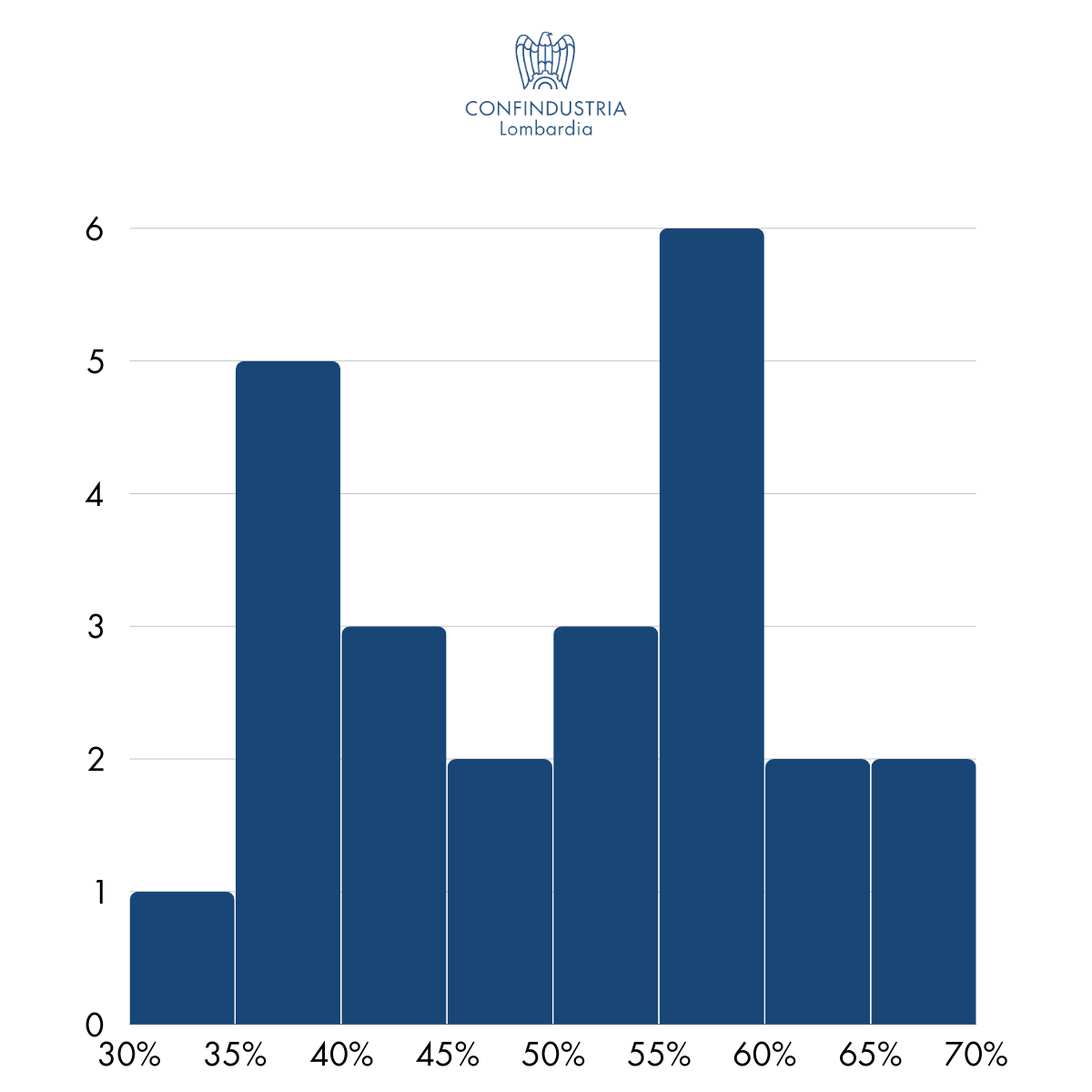
The average scores obtained by companies in the assessments ranged between 30% and 65%, with an average of 49.46% and peaks of excellence reaching 67%.
This indicates that many companies are beginning to adopt sustainable practices, with room for improvement.
The most frequently suggested activities included:
A key element that emerged is that of the sustainable supply chain, in which every actor - suppliers, customers, and partners - adopts shared ESG standards. In a global market that is increasingly attentive to sustainability, this collaborative approach is not just a regulatory obligation, but an opportunity to strengthen the competitiveness of the production system.
Many companies are already evaluating their suppliers according to ESG criteria, making the adoption of sustainable practices a competitive advantage for SMEs.
The objective of this Enterprise Europe Network service was therefore to support SMEs in adopting ESG criteria, ensuring compliance with regulations, certification criteria, and standards, thanks to effective tools for monitoring and improving their alignment.
"Thanks to the assessments, SMEs can now verify their alignment with current regulations and make strategic choices based on personalised reports that offer practical and immediately applicable solutions to improve their performance," concludes Candu.
News

News
News
News
News
subscribe to the EEN newsletter