

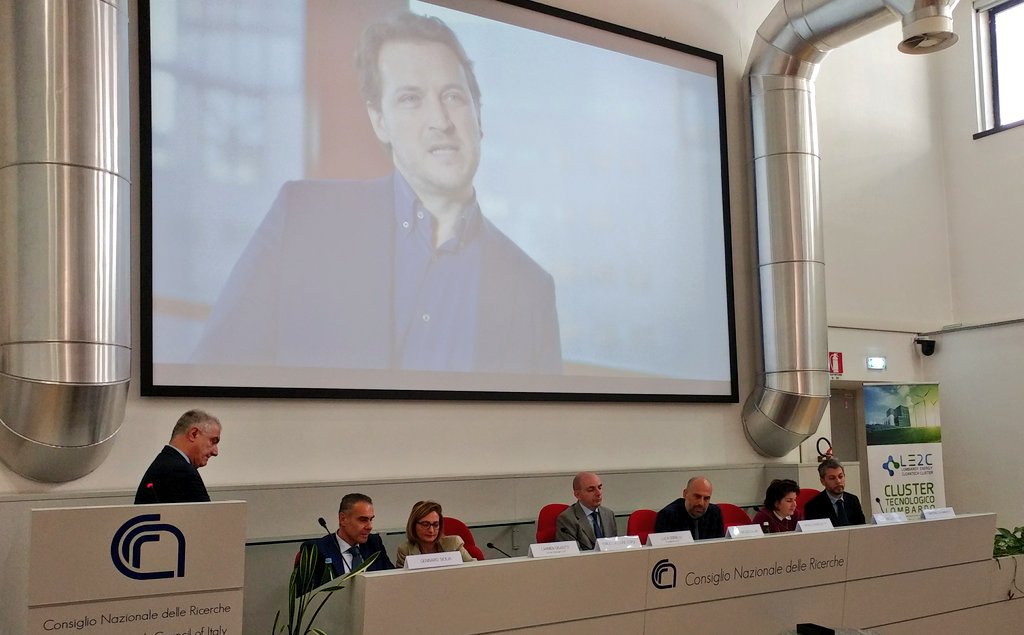
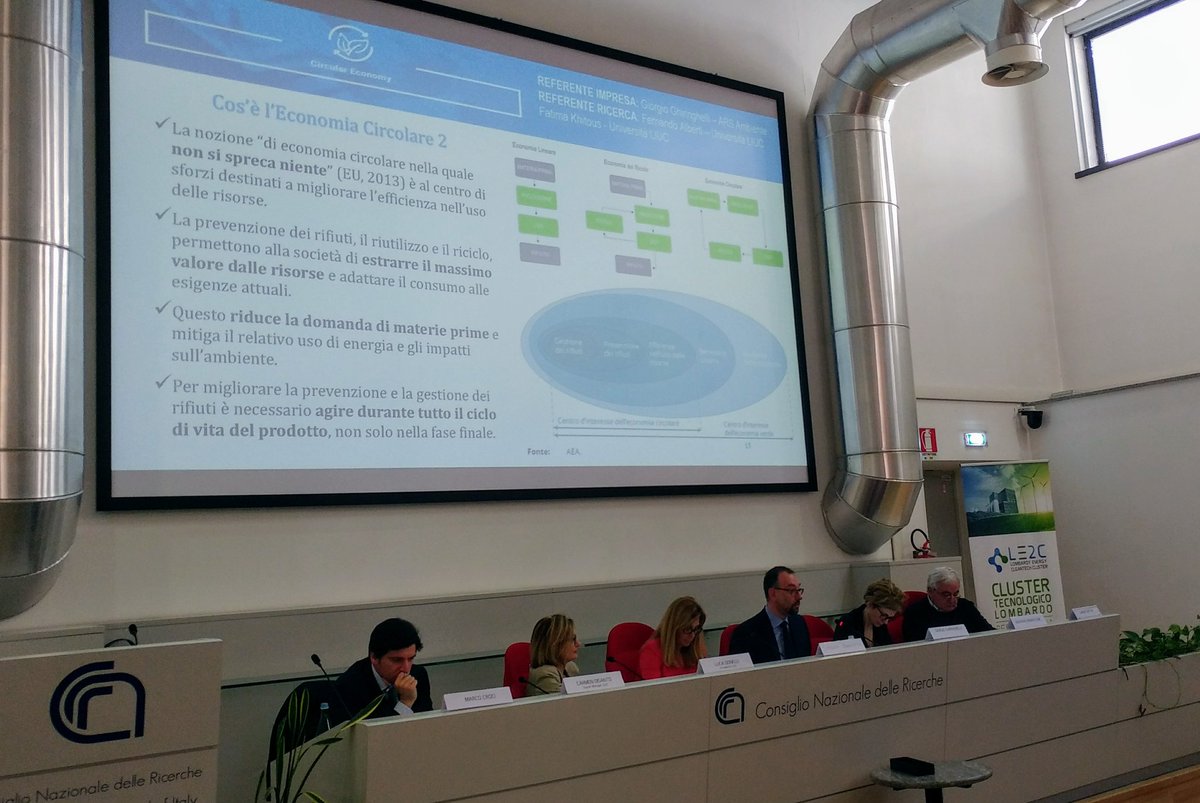
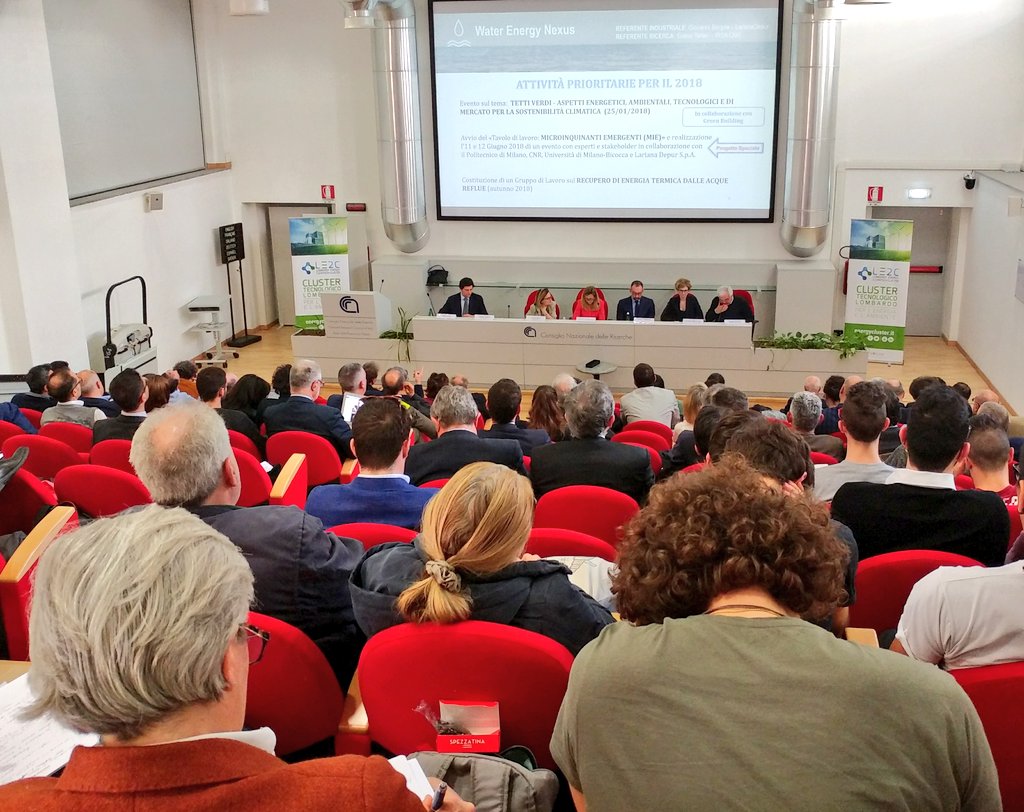
Milan, 18 April 2018 – On the occasion of the Annual General Meeting, the LE2C cluster organised a day entirely dedicated to innovation and technology transfer, featuring keynote speaker Albrecht Reuter, Managing Director of Fichtner IT Consulting GmbH, who presented the "C/sells Project" regarding the decentralised transformation of the energy system through Smart Grids. The key activities of the Lombardy Energy Cleantech Cluster for 2018 were then presented, along with the future challenges of the Circular Economy and the Cluster's four Areas of Competence.
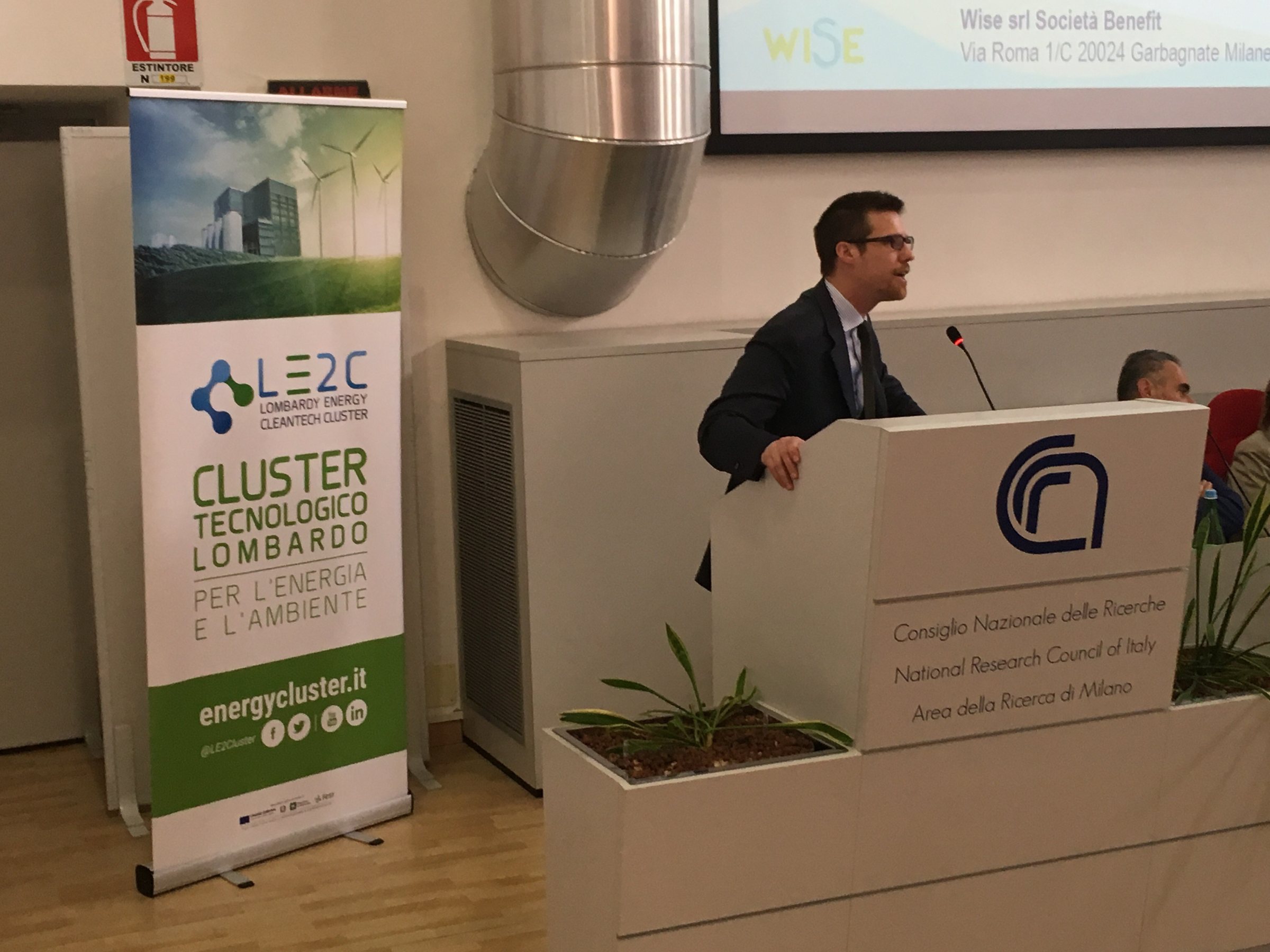
The morning concluded with testimonials from five members—companies that have secured awards and funding for innovative products in the energy and environmental sectors. These include Aeromeccanica Stranich, which won European funding under the H2020 SME Instrument programme for the prototyping of an energy-saving turbofan; Glass to Power, which presented a technology for integrating photovoltaics into window glass; Marlegno, which was awarded first place in the Lombardy Region's Smart Living call for tenders with the AdESA (Architectural, Seismic and Energy Adaptation) project; Pozzi Leopoldo, which is a partner in an H2020 project on technology for heat recovery from wastewater; and WISE, a benefit company whose CITHYD web app, designed to prevent hydrological risks, was selected as one of the 30 innovative projects in the international Water First competition at Seeds&Chips.
In the afternoon, over 120 B2B meetings were held for both LE2C members and external parties. A desk was provided for each Area of Competence, alongside the Europe Desk, which offered free assistance for accessing European calls and partner searches in collaboration with the EEN - Enterprise Europe Network.
“This day, entirely dedicated to our members,” explains Lombardy Energy Cleantech Cluster President Luca Donelli, “aims to foster collaboration between companies and research centres through the development of bottom-up initiatives.” “Our first year leading the Lombardy Energy Cleantech Cluster has been characterised by an intense dialogue with our main stakeholders and partners, leading to the drafting of the 2017-20 Strategic Plan, the reorganisation of our areas of competence, the renewal of our branding and website, and the intensification of our activities in support of innovation.” “This journey is only just beginning; over the next two years, we want to reap the rewards of what we have sown. However, for this to be successful, the commitment of our members is essential, as they must be active participants in the development process,” concludes President Donelli.
“A process,” adds Cluster Vice President Stefano Besseghini, who is also President of RSE, “in the presentation of the strategic action he himself named ‘Cluster Innovation Workshop’, which aims to highlight how the Cluster acts as an innovation laboratory. It does not merely propose predefined solutions to a wide audience of companies, but focuses on building these tools in collaboration with industry stakeholders.” “A first step in this direction began with the SUSME project, funded by the Lombardy Region, to develop a feasibility study for optimising the technical and scientific offerings of Lombardy’s research facilities. Despite the embryonic nature of this initiative, there has been a great deal of expectation, making it necessary to move from the conceptual phase to the project phase. This is further proof of the soundness of the strategic choice made by the cluster,” adds Stefano Besseghini.
The morning concluded with a speech by Ermanno Boccalari of the Lombardy Region’s Directorate General for Research, Innovation and Universities, who emphasised the importance of the role of clusters in ensuring efficiency and practical results, which, together with research centres and the network of SMEs, make the Lombardy production system one of the most competitive in Europe.
Further information on the programme is available on the Lombardy Energy Cleantech Cluster website, where you can also download the 2017 Cluster Activities Report and the slides presented on the 2018 activities, including the challenges proposed by the Areas of Competence, where research centres and companies work together to foster innovation, technology transfer and create business opportunities.
News
News
News
News
News
subscribe to the EEN newsletter