

Date:
15 March 2019
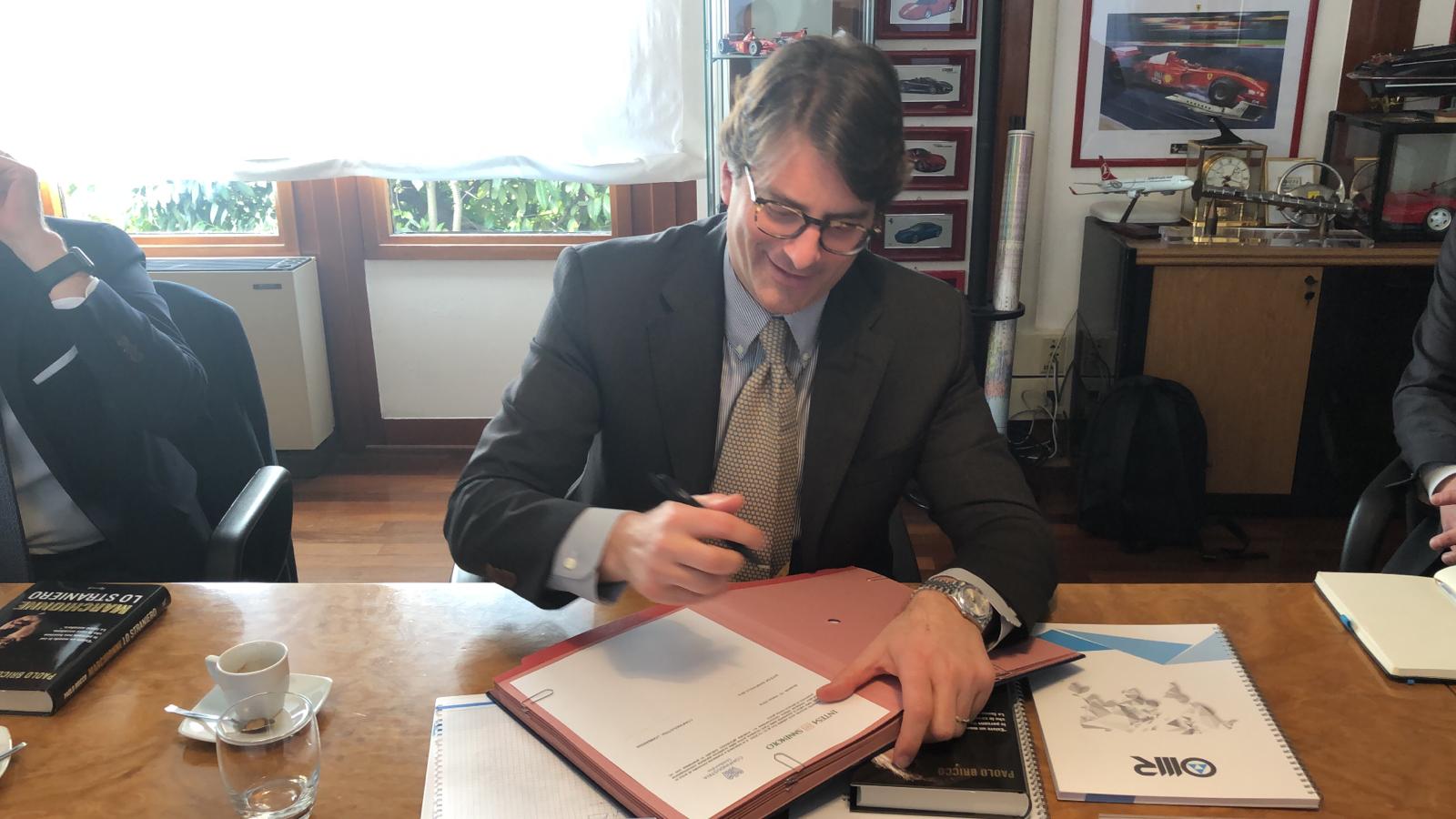
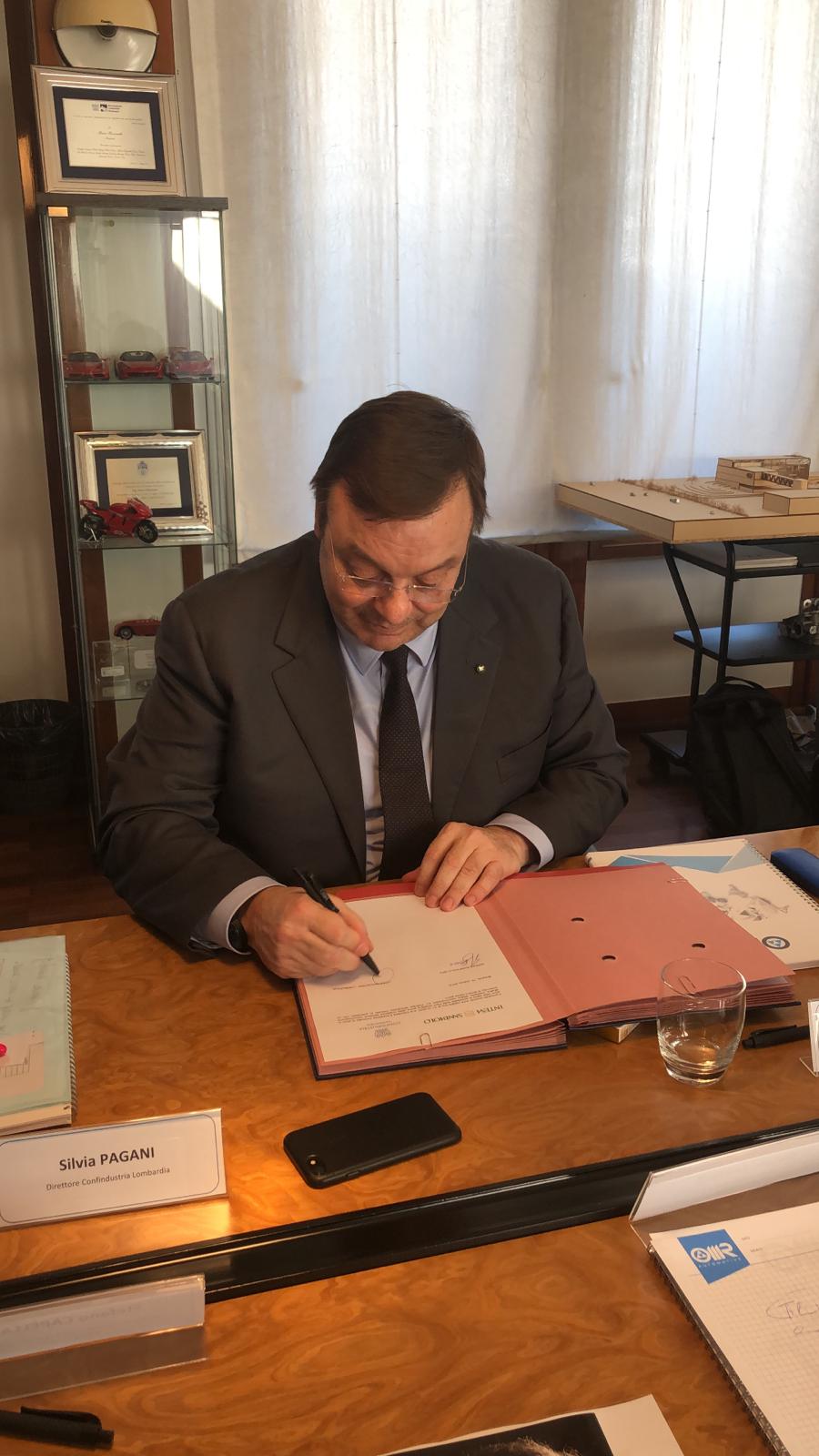
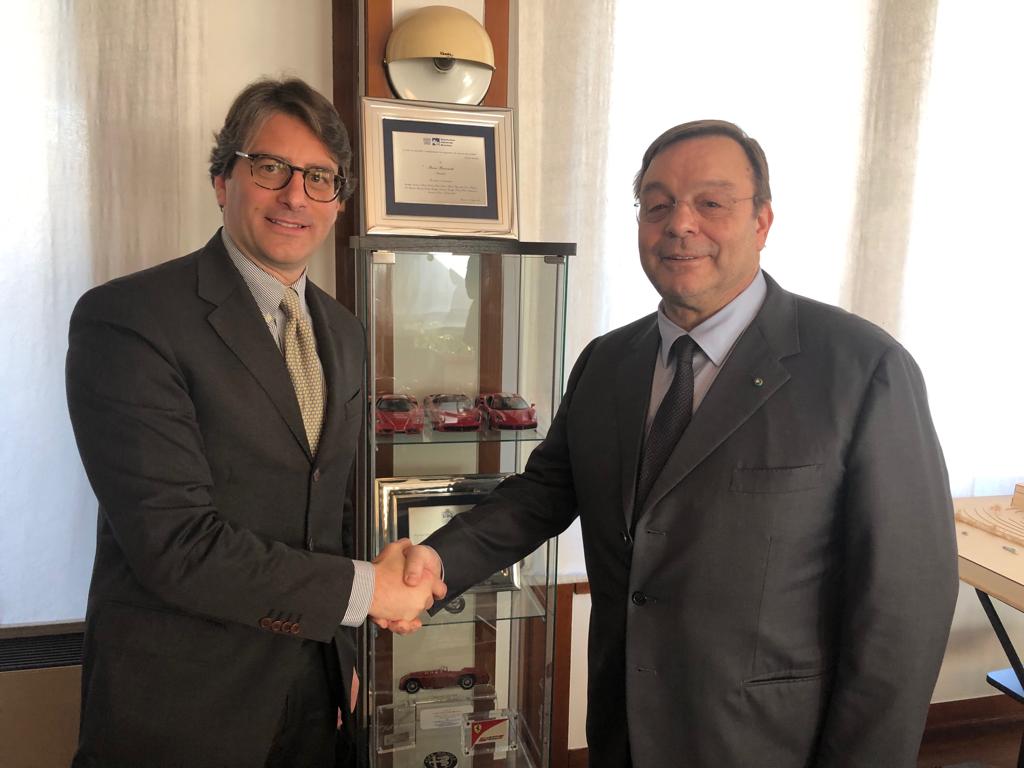
The bilateral agreement follows the framework agreement signed on 4 March by Confindustria Lombardia with the five main banking institutions.
Brescia, 15 March 2019 – Intesa Sanpaolo and Confindustria Lombardia have today signed the first bilateral cooperation agreement, following the framework agreement signed on 4 March, aimed at promoting and enhancing investment by Lombardy’s SMEs by raising awareness of the new credit access tools provided by Intesa Sanpaolo to its members. In particular, the agreement signed by Confindustria Lombardia President Marco Bonometti and Stefano Barrese, Head of the Banca dei Territori Division at Intesa Sanpaolo, addresses the need to support Lombardy-based companies operating within production supply chains, to promote their growth as a fundamental element of regional economic development.
This is an invitation for companies to join supply chains, strengthen their creditworthiness and improve access to new credit and investment channels, highlighting intangible qualitative aspects and forward-looking elements to address the challenges of change, digitalisation, scaling up and entering new markets.
Membership of a supply chain, led by a champion or lead company, benefits all small and medium-sized enterprises that contribute to its success, down to the smallest supplier, often a sole trader or artisan, to whom the lead company’s rating is extended during credit assessment, resulting in better financing terms.
In this regard, Intesa Sanpaolo has developed a corporate rating model, validated by the ECB, which values the intangible aspects, competitive positioning and development prospects of SMEs. The first qualitative element in the new rating model is membership of ecosystems of excellence, which the bank has identified through the design and implementation of the Supply Chain Development Programme, which, since 2015, has enabled the signing of 622 contracts with lead companies representing a turnover of over 70 billion euros. Of these, 167 supply chains have been signed in Lombardy with a turnover of 22 billion euros.
In the first few months of 2019, six new supply chains were activated in Lombardy, mainly in the mechanical and electronic sectors, with a total turnover of approximately 160 million euros and around sixty strategic suppliers. A further ten new Lombardy supply chains are currently being finalised.
Among the lead companies in the Brescia area are IMG of Capriano del Colle (Brescia), a dynamic company and leader in the rubber and plastic injection moulding press sector, and the Caseificio Sociale Gardalatte of Lonato (Brescia), an agricultural cooperative founded about fifty years ago, which processes 800,000 quintals of milk into Grana Padano and over 100,000 into Provolone every year.
There are four main elements supporting the development of new supply chains made available by today’s agreement:
Training: Skills4Capital is the Intesa Sanpaolo project defined with Confindustria for the appropriate enhancement of a company’s human, financial and organisational capital, including within supply chains;
Internationalisation: access for the entire supply chain to international markets, thanks to Intesa Sanpaolo’s direct presence in 40 countries, collaboration agreements in another 85 countries and correspondent relationships with over 4,000 banks;
Corporate Finance: the supply chain is well-positioned to seek capitalisation paths through specific corporate finance initiatives and effective access to capital markets, to which the Intesa Sanpaolo Group has dedicated a new support structure;
Circular Economy: a ceiling made available by Intesa Sanpaolo for innovative and transformative projects that can act, even within supply chains, as an accelerator for the economic development of Lombardy’s companies from a sustainability perspective.
The agreement signed today is aimed at promoting investment by Lombardy’s SMEs through the ten territorial associations of Confindustria Lombardia and the Intesa Sanpaolo Lombardy Regional Directorate, which operates in the Lombardy provinces excluding Milan and Monza Brianza. The objective of the agreement is to facilitate access for SMEs, particularly those not yet able to finance their own growth and development, to financing tools dedicated to investment, especially those aimed at supply chains and Industry 4.0.
Marco Bonometti, President of Confindustria Lombardia:
“Following the framework agreement signed by Confindustria Lombardia with the main banking institutions, the agreement with Intesa Sanpaolo will help Lombardy’s SMEs belonging to production supply chains to develop their investments, thereby benefiting from their membership and their fundamental contribution to the success of the supply chain itself. Furthermore, the focus on training, internationalisation, corporate finance and the circular economy provided for by the agreement represents a strategic lever for the future of Lombardy’s businesses. For Confindustria Lombardia, this is a great achievement, attained in the interest of companies and territories, which will be implemented thanks to the support of Lombardy’s territorial associations: never before has there been such a need to devise new tools and solutions to build an increasingly competitive future, and the agreement with Intesa Sanpaolo is a step in the right direction.”
Stefano Barrese, Head of the Banca dei Territori Division at Intesa Sanpaolo: “SMEs are the lifeblood of our country and, even in difficult times, have shown they can innovate by adapting to change. Now we must take a further step together to bring out the culture and value of supply chains and to strengthen the local economy. Intesa Sanpaolo, with over 600 supply chains already activated throughout Italy, 167 of which are in Lombardy, is ready to further support the initiative of Lombardy’s entrepreneurs and, together with Confindustria Lombardia, will support growth, development and economic impact paths as the ideal partner for recovery.”
subscribe to the EEN newsletter