

Date:
27 November 2017
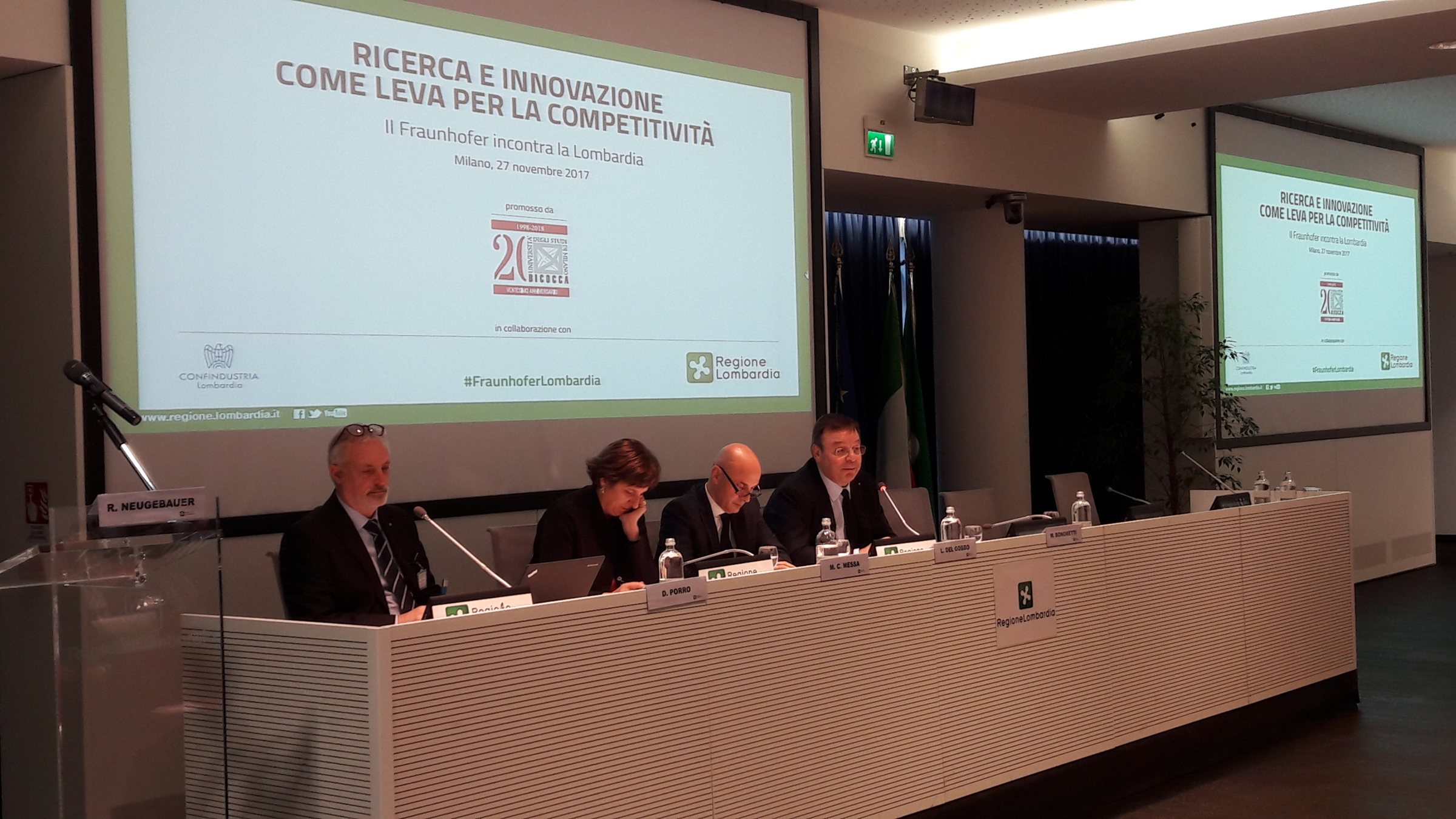
Bonometti: Lombardy's industry can and must compete with the most productive and advanced areas of Europe
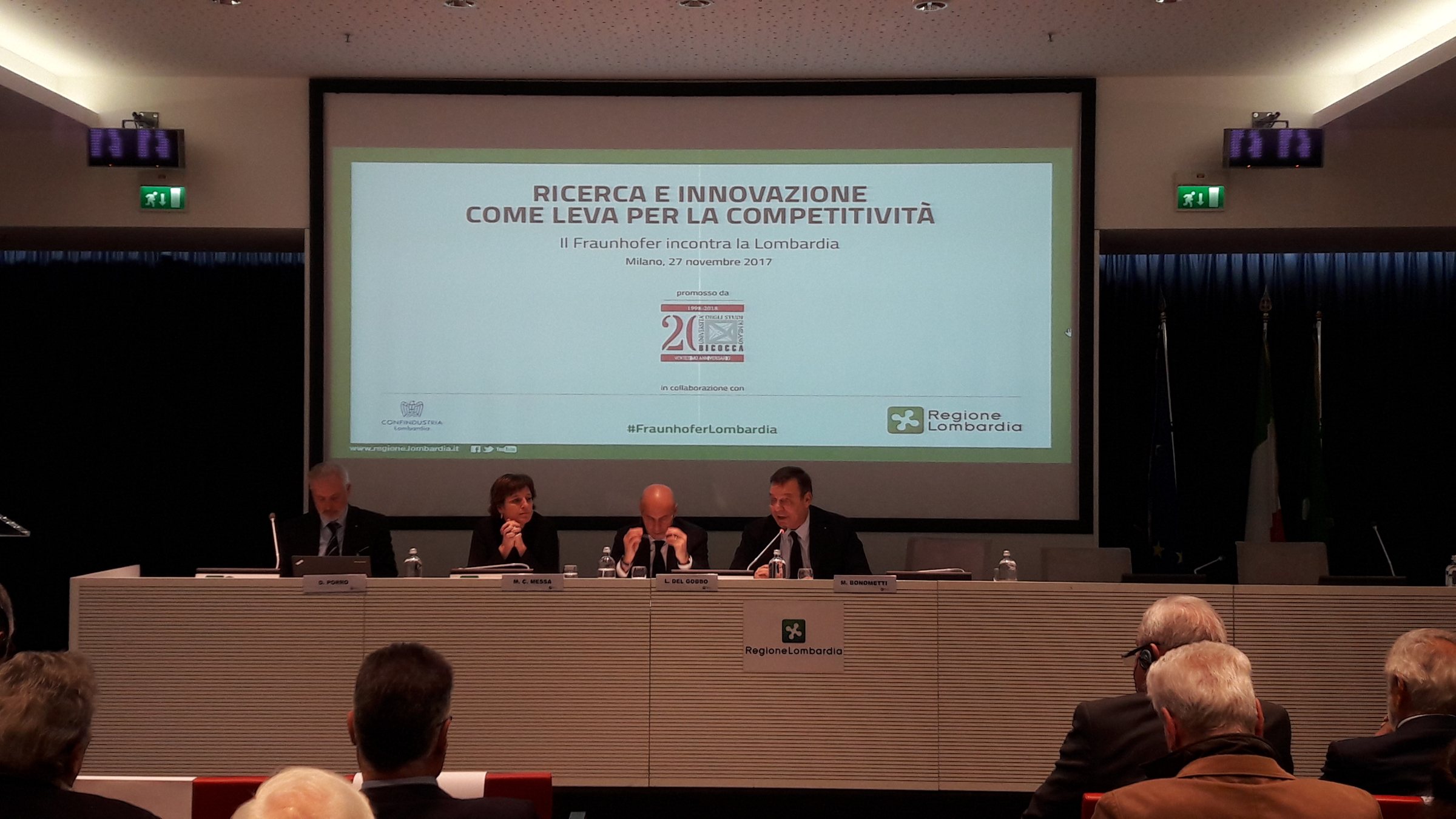
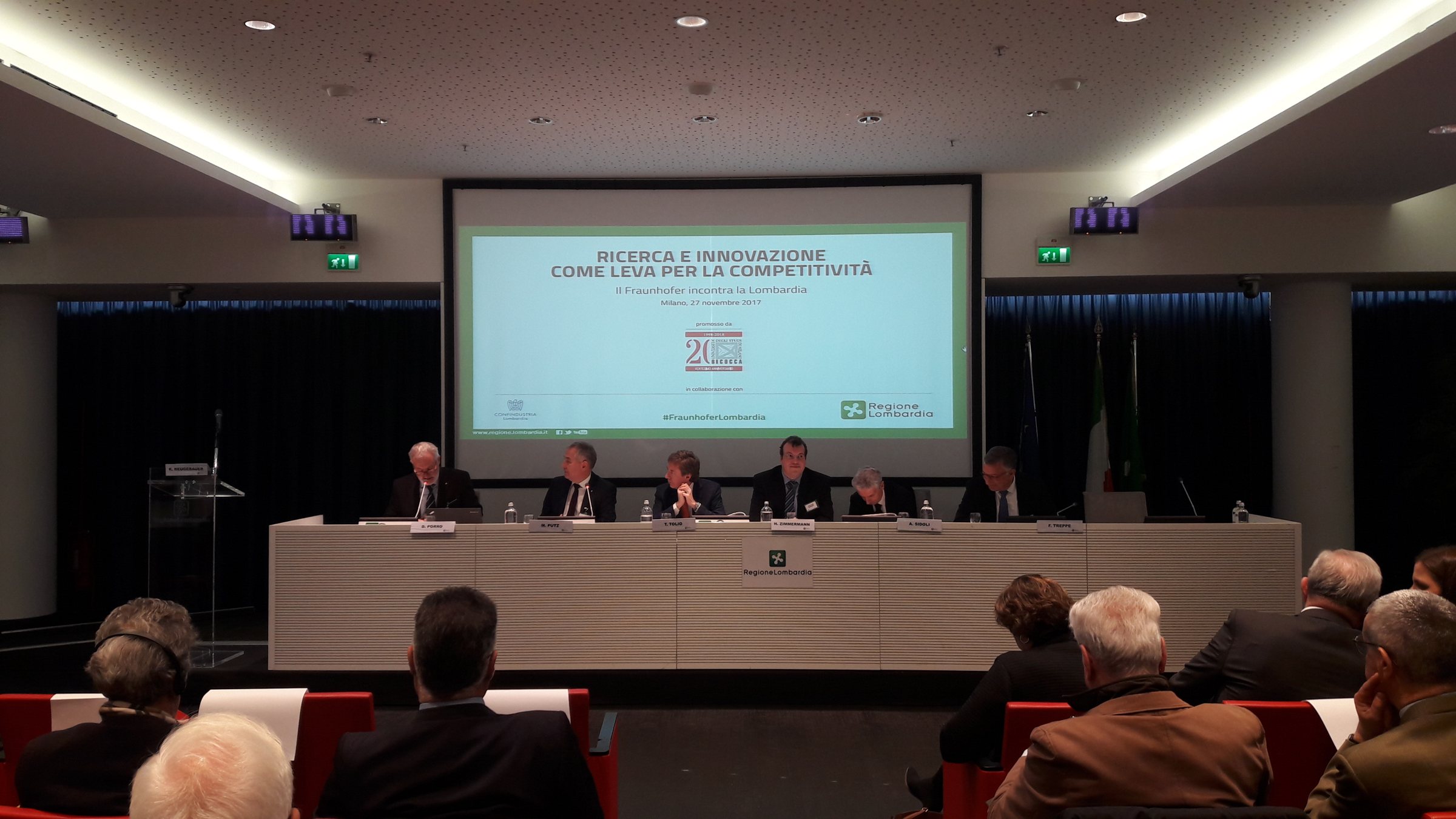
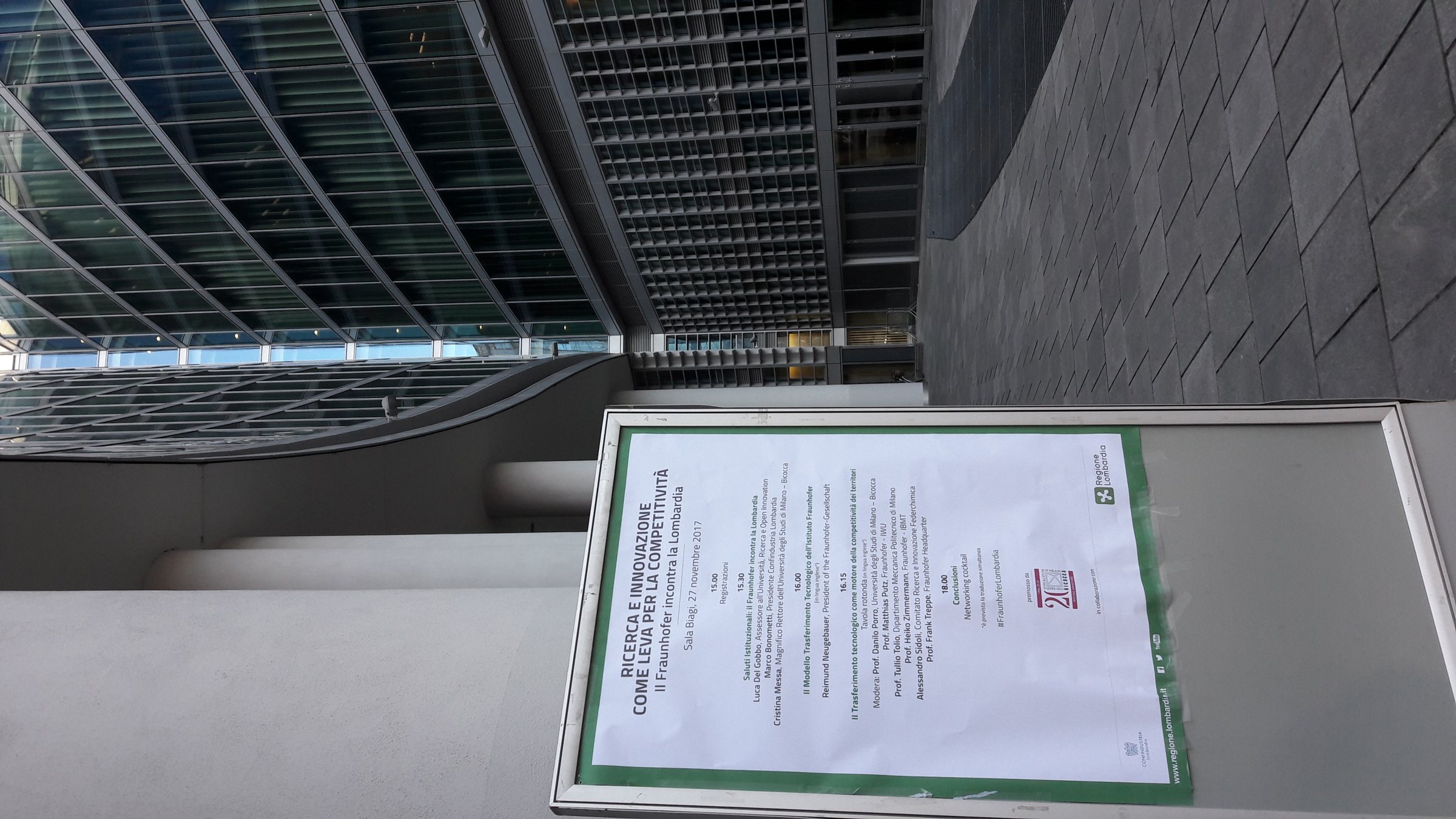
Milan, 27 November 2017 – Over 150 representatives from businesses, universities, research organisations, institutions, and economic sectors attended the event "Research and Innovation as a lever for competitiveness: Fraunhofer meets Lombardy", opened today in the Biagi Hall of Palazzo Lombardia by the Regional Minister for University, Research and Open Innovation, Luca Del Gobbo.
The proceedings were organised in collaboration with the University of Milano-Bicocca and Confindustria Lombardia, represented respectively by the Rector, Cristina Messa, and the President, Marco Bonometti.
A valuable opportunity to learn about an international centre of excellence like the German institute based in Munich, which today brings together 69 research centres across Germany, employs over 24,000 scientific staff, and generates a turnover of 2.1 billion euros.
For the President of Confindustria Lombardia, Marco Bonometti, “the dialogue with Fraunhofer opens a new phase for our region: the ambition of Lombardy's industry is to compete with the most productive and advanced areas of Europe to maintain and strengthen its role as the driving force of the Italian economy. This is also achieved by creating synergies between all stakeholders, business associations, research centres, and institutions, as was the case with the EMA bid, which, although lost, was played on equal terms with our European competitors”.
Bonometti cited two of the tools implemented by Confindustria Lombardia, “which represent potential innovation multipliers for businesses: the Digital Innovation Hub, which will support companies in implementing digital transformation and the transition to Industry 4.0, and the World Manufacturing Forum, an international summit that our region will host permanently from 2018, an event that confirms the international vocation of Lombardy's manufacturing sector and will allow us to set the innovation agenda for the sector,” concluded the President of Confindustria Lombardia.
“An extraordinary example of technology transfer – said Minister Del Gobbo – which relies on the alliance between business, universities, and the research world, aimed at translating the needs and ideas of companies into concrete applications”.
The Minister referred to the Lombardy experience, citing the Research and Innovation Agreements measure, “an opportunity that has involved 210 entities, including small, medium, and large enterprises, research operators, and universities, capable of generating an investment in the region of over 200 million euros”.
Alongside this example, the Regional Minister noted that by the end of January 2018, “the Forum for Research and Innovation will be established, an autonomous body consisting of the 10 best innovators in the world that will support regional policy through knowledge of the impacts of innovation and technical-scientific advancements: a pool of high-profile international experts that we will select from 149 applications received from all over the world”.
Finally, Del Gobbo expressed his hope that “from here on, important collaborations can be forged with the German institute, in the awareness that a public institution like ours must open up ever-wider growth opportunities for the entities operating in the region”.
“Today's meeting – said Cristina Messa – represents an interesting opportunity for discussion on how to leverage research results through the implementation of innovation policies aimed at large, small, and medium-sized enterprises. In this sense, it is important to create synergies with organisations like Fraunhofer to consolidate and expand the network that the University and the Lombardy Region have already put in place to improve the competitiveness and attractiveness of the region through the knowledge economy”.
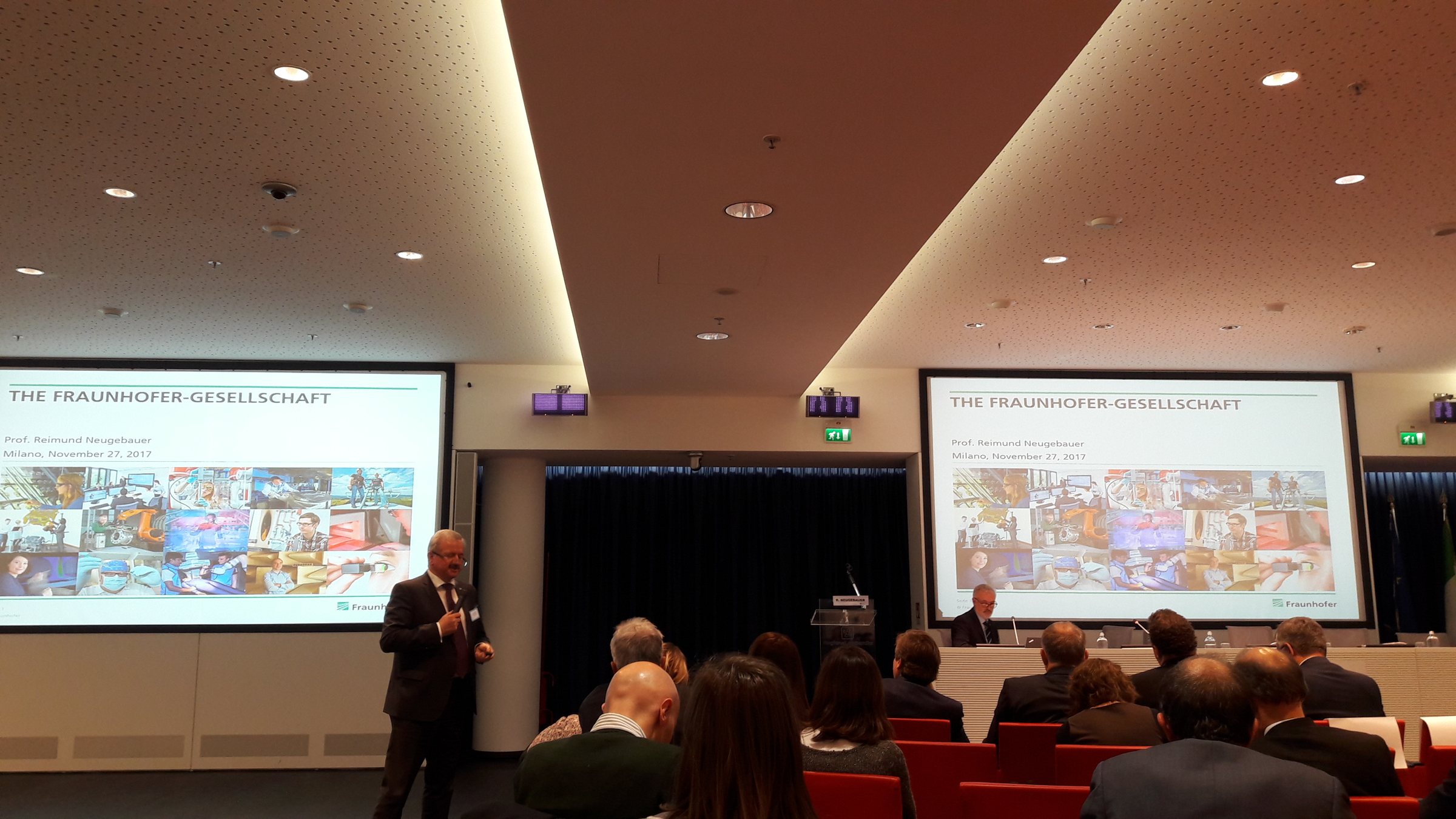
The proceedings continued with a speech by Reimund Neugebauer, President of the Fraunhofer Institute, who illustrated the philosophy and working method behind the success of the German organisation, which has also had an Italian affiliate since 2009: Fraunhofer Italia Research, based in Bolzano.
The occasion was a valuable opportunity to lay the foundations for future collaboration between all participating parties: the drive for growth in innovation and development also comes from opening up to the best international centres of excellence.
subscribe to the EEN newsletter