

Date:
14 November 2026
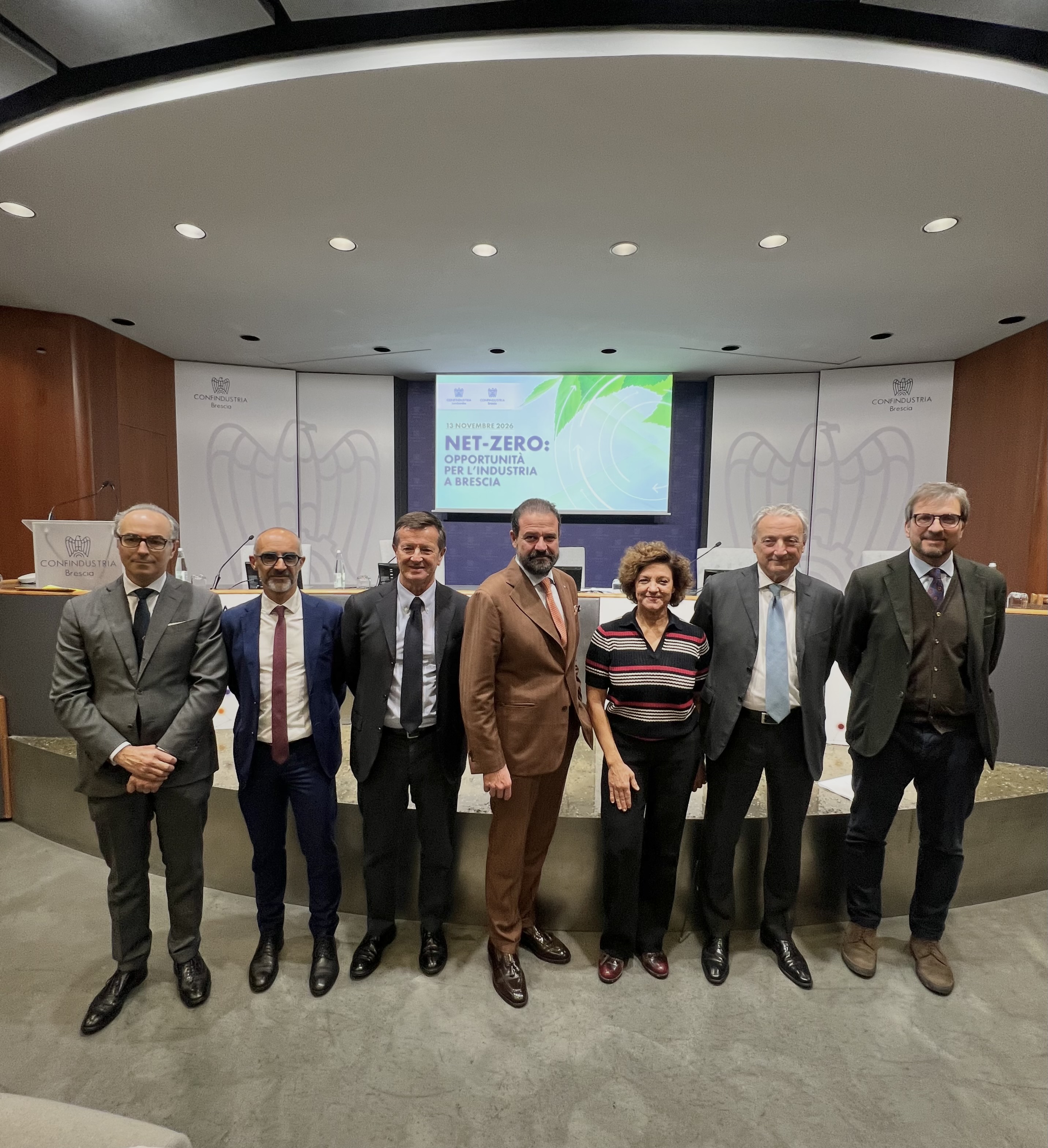
Brescia, 13 November 2026 – Transforming the net-zero transition into an industrial policy initiative for Brescia, capable of bolstering the competitiveness of the manufacturing sector and strengthening the region’s position within new strategic European supply chains. This was the central theme of “Net-Zero: Opportunities for Industry in Brescia”, an event hosted today by Confindustria Brescia alongside Confindustria Lombardia in the Association’s Sala Beretta.
A debate rooted in the distinctive strengths of Brescia’s industrial base: a leading centre of excellence for the Italian steel industry – generating €4.5 billion in revenue in 2024, €357 million in added value, and employing over 6,000 people across the province –, a highly export-oriented manufacturing sector, and an ecosystem of businesses already active in decarbonisation technologies and services. Amid the ongoing development of European policy, this foundation offers a clear vantage point from which to consolidate Brescia’s role in the ongoing industrial transformation.
This initiative aligns with the trajectory established at European level through the Net-Zero Industry Act and the proposed Industrial Accelerator Act, which aims to restore manufacturing’s share to 20% of EU GDP by 2035 whilst introducing regional mechanisms to channel industrial investment, simplify administrative procedures, and expedite project delivery.
Alongside regional opportunities, funding remains a critical consideration. The EU Innovation Fund represents approximately €40 billion for the 2020–2030 period, whilst calls opened in 2026 mobilise in excess of €5 billion, with deadlines falling as early as 2027. These mechanisms are supplemented by the proposed ETS Investment Booster, designed as the cornerstone of the forthcoming Industrial Decarbonisation Bank, alongside further incentives targeting clean investments, process electrification, energy efficiency, and emissions reduction.
Proceedings were opened by Paolo Streparava, President of Confindustria Brescia, and Giuseppe Pasini, President of Confindustria Lombardia. These were followed by contributions from Alessandro Polito, Deputy Head of the Net Zero Industries Unit at the European Commission’s Directorate-General for Internal Market, Industry, Entrepreneurship and SMEs (via video link); Federico Tarantini, Project Officer at DG CLIMA – ETS Unit, European Commission (via video link); Giovanni Marinoni Martin, Vice President of ORI Martin SpA; and Marco Baresi, Director of Turboden SpA. Interviews followed with Monica Frassoni, President of the European Alliance to Save Energy, who provided a Brussels perspective on the challenges of industrial transformation, and Roberto Saccone, President of the Brescia Chamber of Commerce. The event concluded with an institutional panel discussion featuring Giorgio Gori, MEP for the Democratic Party and the Socialists & Democrats (S&D) Group, and Vice-Chair of the ITRE Committee; Massimiliano Salini, MEP, Vice-Chair of the EPP Group in the European Parliament, and member of the ITRE Committee; Benedetta Scuderi, MEP for the European Greens; and Guido Guidesi, Regional Minister for Economic Development for Lombardy.
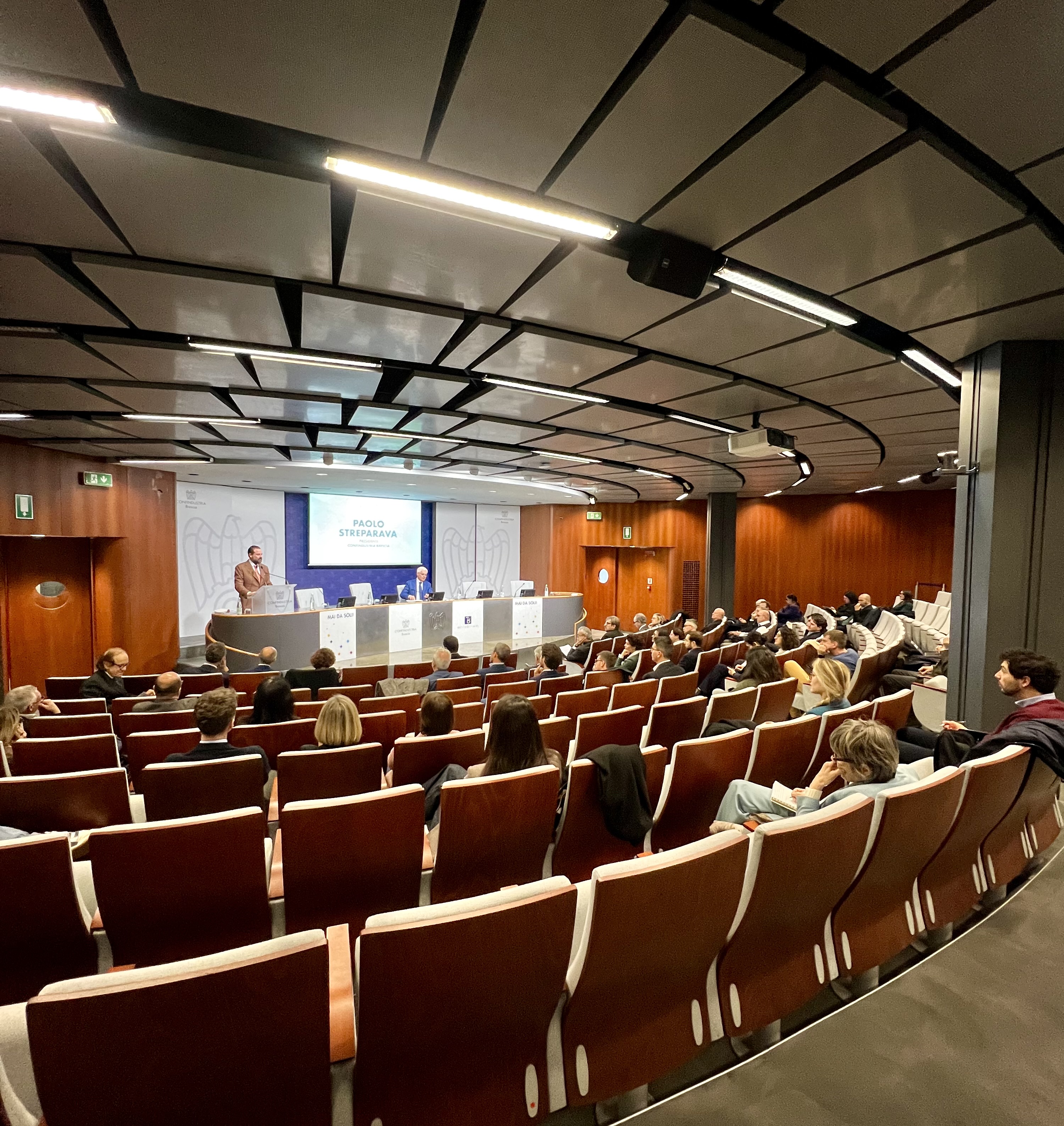
“The transition to a low-emission industrial base cannot merely be treated as an obligation; it must become a deliberate industrial policy project. For Brescia, this is a pivotal issue: we are one of the most industrially dedicated regions in Europe, with all the requisite assets to lead this transformation,” remarked Paolo Streparava, President of Confindustria Brescia. “We must therefore begin taking practical steps to put forward our region as a European benchmark for net-zero industry and industrial acceleration. This is not about securing a label or simply accessing grant funding; it is about building an industrial development framework for Brescia for the next ten years. Competitively priced energy, the decarbonisation of steel and energy-intensive sectors, emerging technologies, infrastructure, the regeneration of industrial sites, and inward investment must all form part of a unified vision. We must be realistic. Over the coming years, public funding will be allocated far more selectively, and competition between regions will intensify. We cannot afford to wait for calls for tenders to open before deciding on our direction. On the contrary, we must determine today where we wish to take Brescia’s industry and develop projects capable of attracting tomorrow’s resources. Confindustria Brescia intends to drive this process by bringing businesses, regional government, national government, and European institutions to the same table, helping to define a definitive industrial agenda for Brescia. The challenge is to establish the conditions that allow Brescia, with its longstanding industrial heritage, to remain competitive for decades to come.”
“Lombardy and its businesses have long been engaged in transitions towards sustainable operating models,” added Giuseppe Pasini, President of Confindustria Lombardia. “Lombardy’s steel and chemical sectors, which are fundamental to Italian and European industry, are progressing successfully towards low-emission production through investments in enabling technologies, such as electrification, and through an expanding circular economy. Decarbonisation must not become synonymous with deindustrialisation. For this reason, businesses are calling for guaranteed security of supply for circular raw materials. From the Circular Economy Act, we expect measures that promote the recovery, recycling, and internal EU use of scrap collected within Europe, curbing exports to non-EU countries that operate outside equivalent regulatory standards. Regarding the ETS, we urge the Government to reallocate a greater proportion of the revenue raised directly to industry, in order to support investment in the decarbonisation of production processes.”
“The findings of the study, conducted in collaboration with Unioncamere’s Centro Studi Tagliacarne, reveal that Brescia ranks fourth in Italy for green technology enterprises, with 1,374 active companies,” stated Roberto Saccone, President of the Brescia Chamber of Commerce. “While this is an encouraging figure, the vast majority of these businesses operate in components and machinery manufacturing. There is, for instance, a profound difference between serving as a supplier dependent on customer technology and requirements, and operating as a business that develops and controls proprietary technology. Indeed, of the 1,374 companies in the potential net-zero ecosystem, only around 15% emerge as primary candidates to be ‘technology owners’—firms capable of developing highly innovative, market-critical products underpinned by proprietary knowledge and solutions. The overarching challenge today is to accelerate the shift from incremental process innovation towards advanced technological innovation. In this respect, the recently established BIND network will provide significant impetus. Net-zero can thus serve as a catalyst for Brescia’s enterprises to pioneer cutting-edge technologies. In a global landscape where decarbonisation is increasingly tied to the European Union’s strategic autonomy and energy security, Brescia’s industrial sector demonstrates that it is, on the whole, prepared to confront the challenges ahead.”
“Brescia possesses the enterprises, expertise, and initiatives required to spearhead Europe’s industrial transition, and Brussels is providing tangible mechanisms to support it—including ETS revenues, which could offer vital funding to assist businesses, something that has not materialised to date,” concluded Monica Frassoni, President of the European Alliance to Save Energy, offering a Brussels perspective on the challenges of industrial transformation. “The fundamental driver of energy costs in Italy remains an excessive dependence on natural gas, which sets the electricity price for over 70% of operating hours. This is the issue that must be addressed, both by expanding the share of renewables and by investing heavily in electrification and energy efficiency technologies.”
subscribe to the EEN newsletter