

Date:
18 September 2017
10th edition of the Confindustria Lombardia Report, focusing on working hours and absenteeism
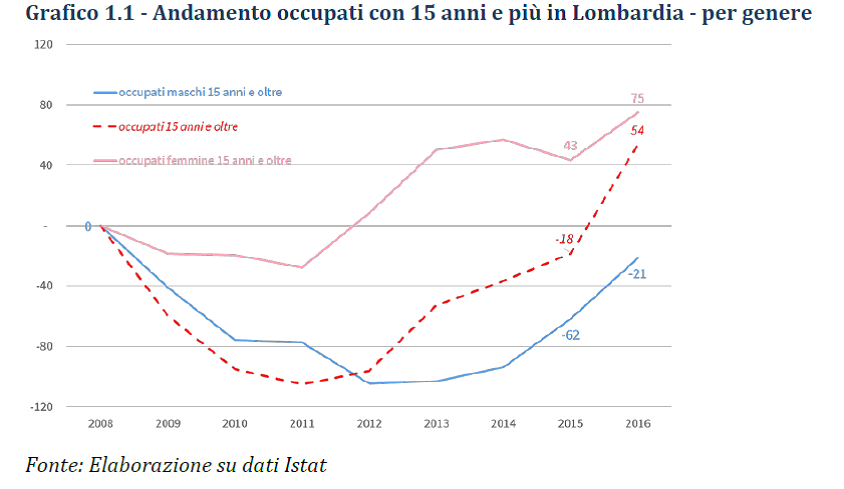
Milan, 18 September 2017 – The number of employed persons has exceeded 2008 levels (+54,000 – chart 1.1), with a slight decline in youth unemployment and NEETs, and a drastic reduction in the use of the Wage Guarantee Fund (CIG) compared to the previous year: these are the main findings from the Confindustria Lombardia annual report on the regional labour market.
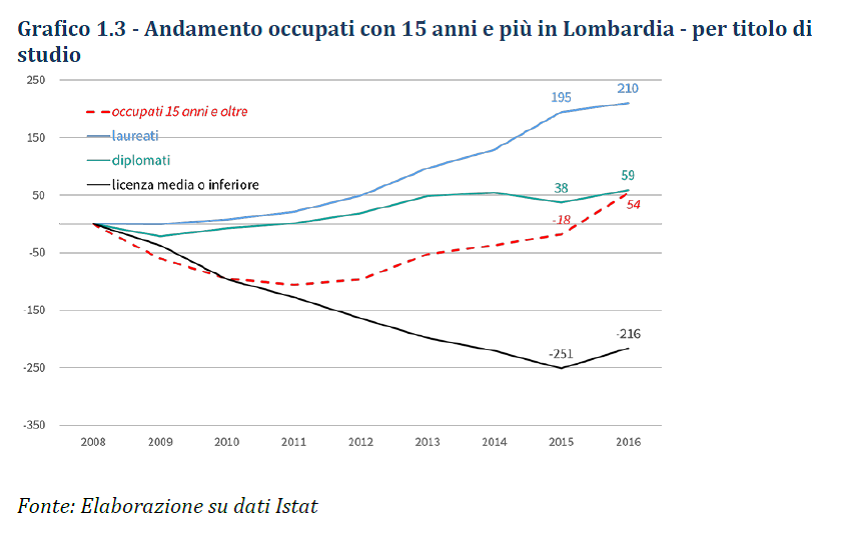
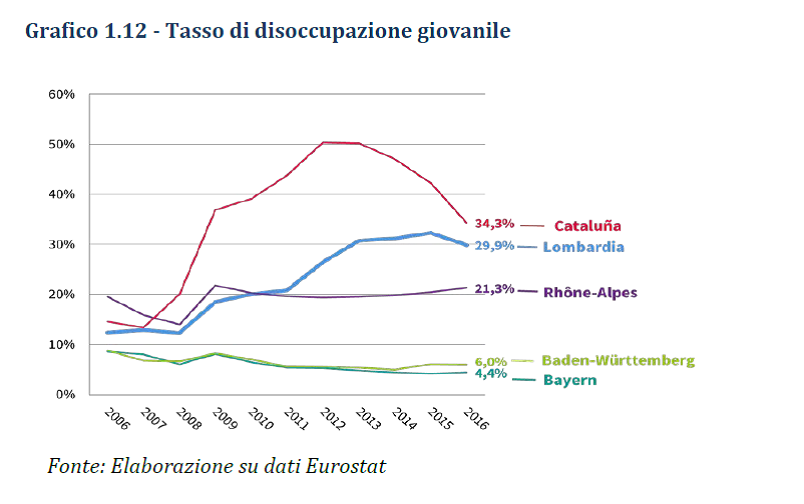
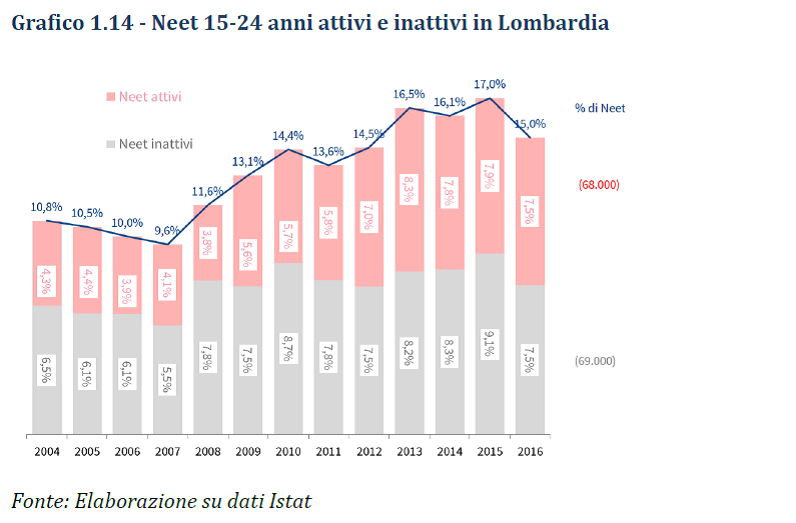
The 10th edition of the survey provides a picture of a labour market in Lombardy that is progressively regaining momentum. Among the most encouraging signs is the increase in female employment and in more highly educated workers (charts 1.1 and 1.3), while the generational divide is widening: there are almost 90,000 fewer employed people aged 15-24 compared to 2008, while those over 55 have seen a jump of 260,000. However, the greatest effects of the crisis have been on unemployment: despite the positive performance in 2016, the number of unemployed – which fell by almost 20,000, from 364,000 in 2015 to 346,000 – remains more than double the 164,000 recorded in 2008. In 2016, youth unemployment in Lombardy fell back below the 30% threshold (29.9%) and the number of NEETs decreased from 155,000 to 137,000 (charts 1.12 and 1.14).
In 2016, inflows saw a slight increase in fixed-term contracts (+1.5%) and a substantial decrease in the use of permanent contracts – 32.7% (compared to a positive change of 64.8% in 2015). In this context, the most interesting phenomenon is undoubtedly the renewed interest from companies in apprenticeship contracts, with inflows increasing by 25.1%.
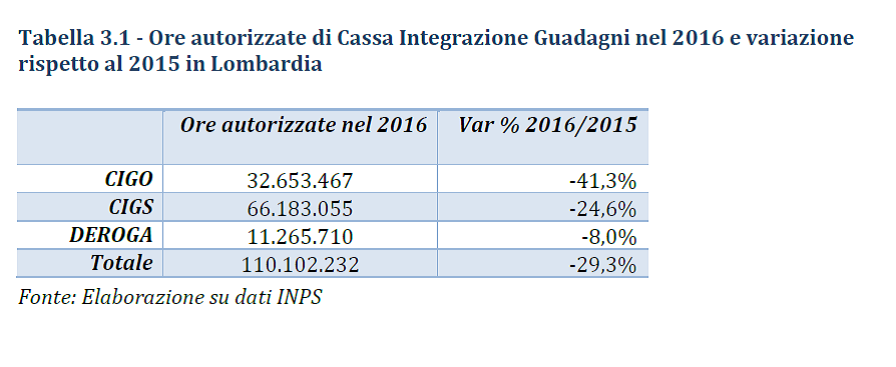
Some of the most positive indicators for 2016 come from the Wage Guarantee Fund (CIG): in Lombardy, over 110 million hours were authorised, a reduction of 29.3% compared to the previous year (table 3.1).
For the President of Confindustria Lombardia, Alberto Ribolla, “a labour market such as the one that emerges from the Confindustria Lombardia survey, with more women, more highly educated workers, and low absence rates, is an evolving, more mature market; on one hand more inclusive (women), but also more selective (greater demand for skills). It is precisely on this evolution that we must establish a long-term strategy (also including the world of education, which does not just mean school) to best manage this profound evolution that awaits us, while simultaneously creating a true generational pact, a pact aimed at the drastic reduction of youth unemployment and a
updating of the technical skills of those over 55 (also from an Industry 4.0 perspective). Apprenticeships and school-work alternation,” continues Ribolla, “in addition to the proposals the Government is working on, such as the youth bonus only for those who do not lay off staff, are excellent tools. But beyond the regulatory level, we must work in parallel in a pragmatic way to reduce the mismatch between supply and demand,” concludes the President of Confindustria Lombardia.
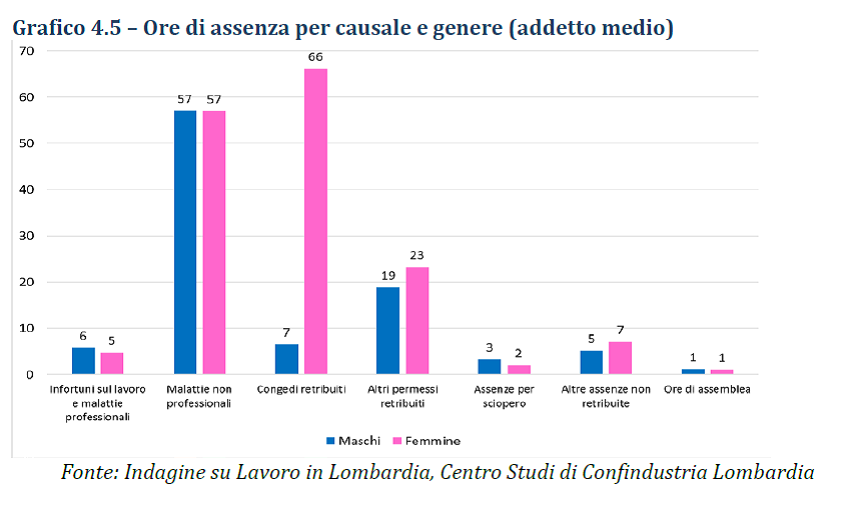
The 2017 report, prepared by the Confindustria Lombardia Research Centre based on 2016 Istat data and a questionnaire completed by approximately 1,000 Lombard companies, then focuses on working hours and absenteeism:
Attached is the complete ‘Labour Market in Lombardy – 2017 Report’
subscribe to the EEN newsletter