

Date:
23 June 2016
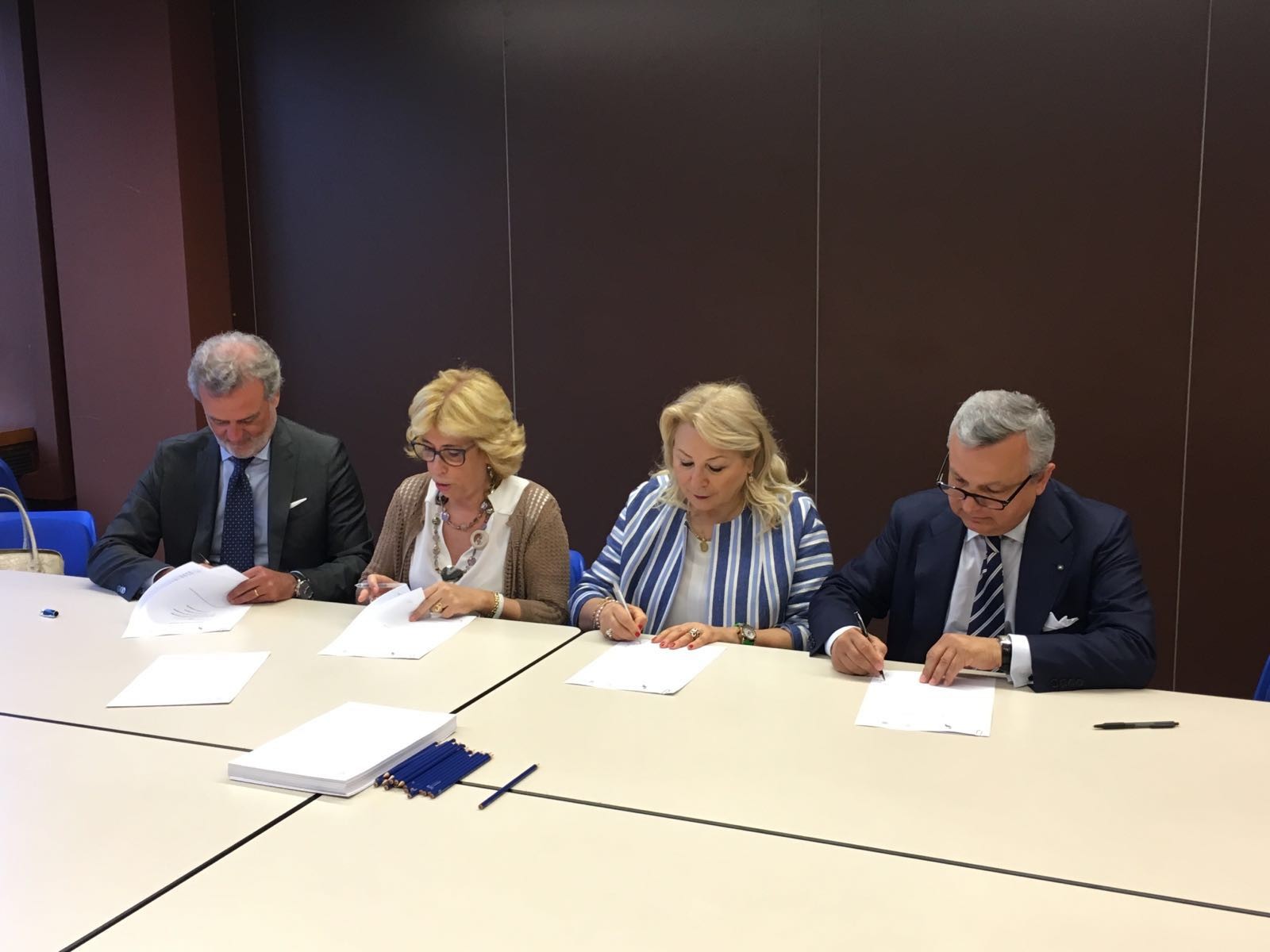
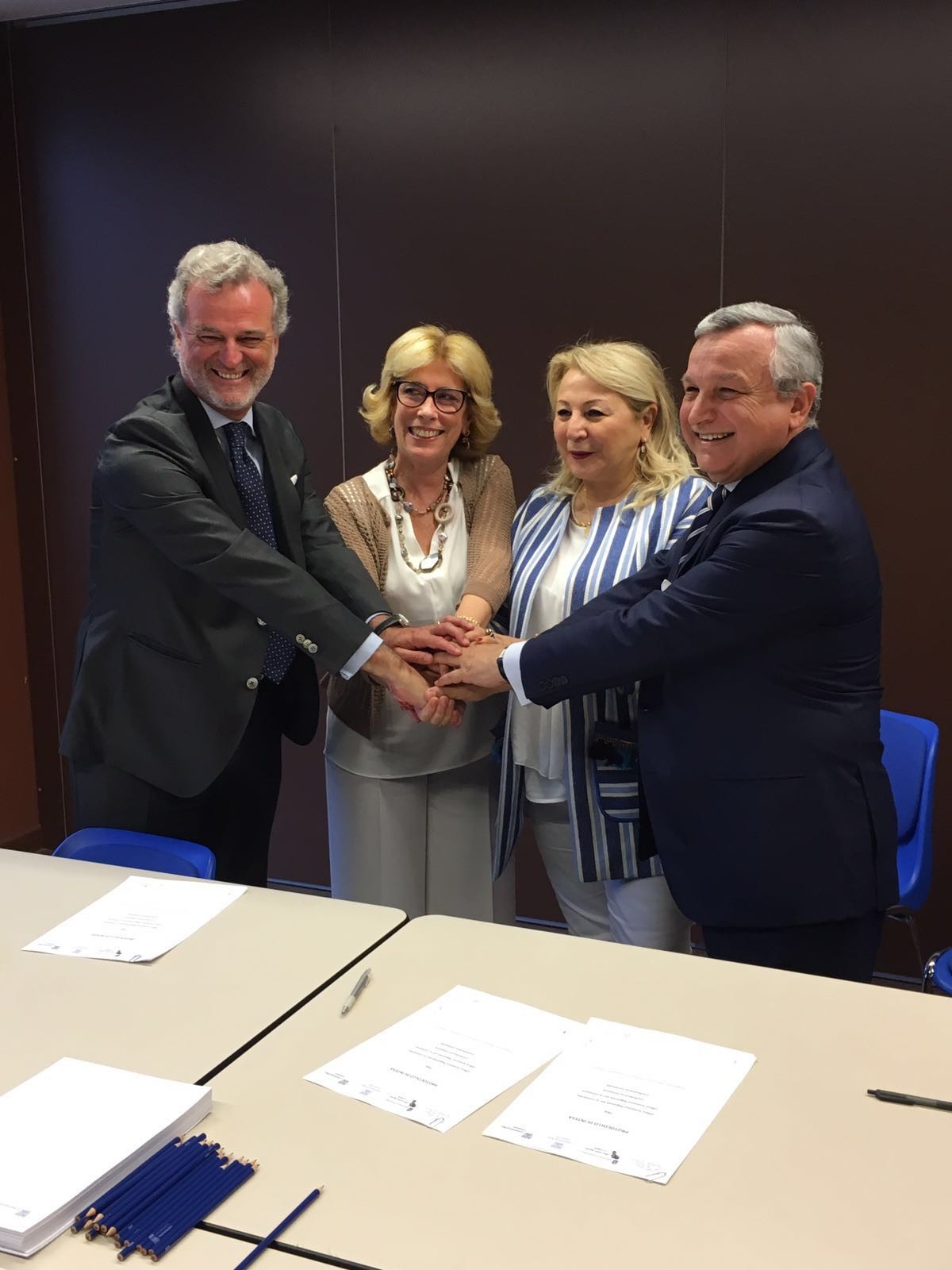
Agreement signed by Confindustria Campania, Confindustria Lombardia and the regional school offices of both regions
Rome, 23 June 2016 – A Lombardy-Campania partnership has been established for education, specifically regarding school-work alternation. Today, the Memorandum of Understanding 'Project for school-work alternation between Lombardy and Campania' was signed in Rome at the headquarters of the industrial association, on the sidelines of the Confindustria General Council. The agreement was signed and promoted by Confindustria Lombardia, Confindustria Campania, the Regional School Office for Lombardy and the Regional School Office for Campania.
The Protocol will last for two years and aims to pool the experience and best practices of the two regions involved. The regional school offices of Campania and Lombardy have long been active in implementing national policies for upper secondary school students regarding school-work alternation by supporting the design and implementation of bespoke programmes. This experience complements the need of businesses, represented by Confindustria Campania and Confindustria Lombardia, for qualified human capital that meets the real requirements of the labour market.
For the President of Confindustria Lombardia, Alberto Ribolla, collaboration between the education sector and businesses “is of fundamental importance to reduce the gap between labour market supply and demand and increase the employability of our young people. Within the #Lombardia2030 Strategic Plan, Confindustria Lombardia has identified the matching of business needs with the evolving dynamics of the market as a key requirement for ensuring the competitiveness of our workforce and our businesses in the years to come. School-work alternation has been a priority for businesses for years: the fact that the 'Buona Scuola' reform has made it a mandatory requirement should not make us forget the quality experiences achieved in our region, which must be valued and shared with other regions. The exchange of best practices between different areas of the country fosters homogeneous growth and initiates a virtuous circle that allows businesses to access the human resources and professional skills they need, especially in view of the evolution towards Industry 4.0,” concluded Ribolla.
“Professional development is essential at any age, and young people entering the world of work must be competitive and seize every possible training opportunity offered to them. Therefore, in a world that is evolving and transforming at a rapid pace, the attention businesses pay to training and school-work alternation projects is an important signal and an opportunity not to be missed for students,” says Costanzo Jannotti Pecci, President of Confindustria Campania – “because it offers a concrete response to the difficult employment situation we have been facing for years and which we are trying to prevent for future generations. In Campania, we were pioneers of the 'Buona Scuola' reform with the various initiatives implemented, especially by the groups within the various local branches in Campania, because we are convinced that the only viable way to combat the spread of youth unemployment is to bring the world of work and business closer together through concrete projects and tools; not only for the training of new professional roles but also to encourage young people to try their hand at an entrepreneurial venture. We are making our best practices available and are convinced that this collaboration can further enrich the knowledge and stimulus of students in Campania and Lombardy, offering them greater opportunities and innovative impulses for businesses.”
“School-work alternation,” emphasises the Director General of the Regional School Office, Dr Delia Campanelli – “is not a new topic for Lombardy, which, thanks to the collaboration with the productive sector and the work carried out over the years by my office, can now be a leader in spreading a quality approach to the design and implementation of these programmes. With this agreement, our students will have a further, significant opportunity to grow professionally and culturally, to engage with different places and environments, and to put their talents to good use.”
“Thanks to Law 107/2015, school-work alternation has now become a great opportunity to ensure our young people have a chance for cultural growth, in order to plan their future with responsibility and awareness. However, a leap in quality is necessary so that new teaching and organisational models allow the concept of learning to be transformed into a permanent activity. The signing of this important memorandum of understanding stems from the desire of schools and businesses to come closer together and foster greater dialogue between the two systems, with the common intent of weaving a dense network that connects the North and South of our country and provides a concrete response to the educational needs of all our students,” says the Director General of the Regional School Office for Campania, Dr Luisa Franzese.
With the agreement signed today, the two regions commit to fostering better academic and professional guidance in the Campania and Lombardy territories, consolidating school-business collaborations in terms of educational innovation, promoting projects and educational partnership experiences between schools and businesses, and initiating an exchange of best practices related to the specific school curriculum in question. This will be achieved in particular through:
- an increase in relationships and collaborations at a local level;
- the participation of upper secondary schools in the project actions provided for by this agreement;
- the sharing of methodologies, tools and best practices developed over the years regarding the design and implementation of school-work alternation programmes with partners, as well as expert technical support;
- the activation of exchanges and discussions between students from the two territories, including through business simulation;
- making the results of the survey on skills expected by businesses available to partners;
- the involvement of local businesses willing to participate in school-company project workshops to improve school-work alternation programmes.
subscribe to the EEN newsletter