

Date:
23 February 2016
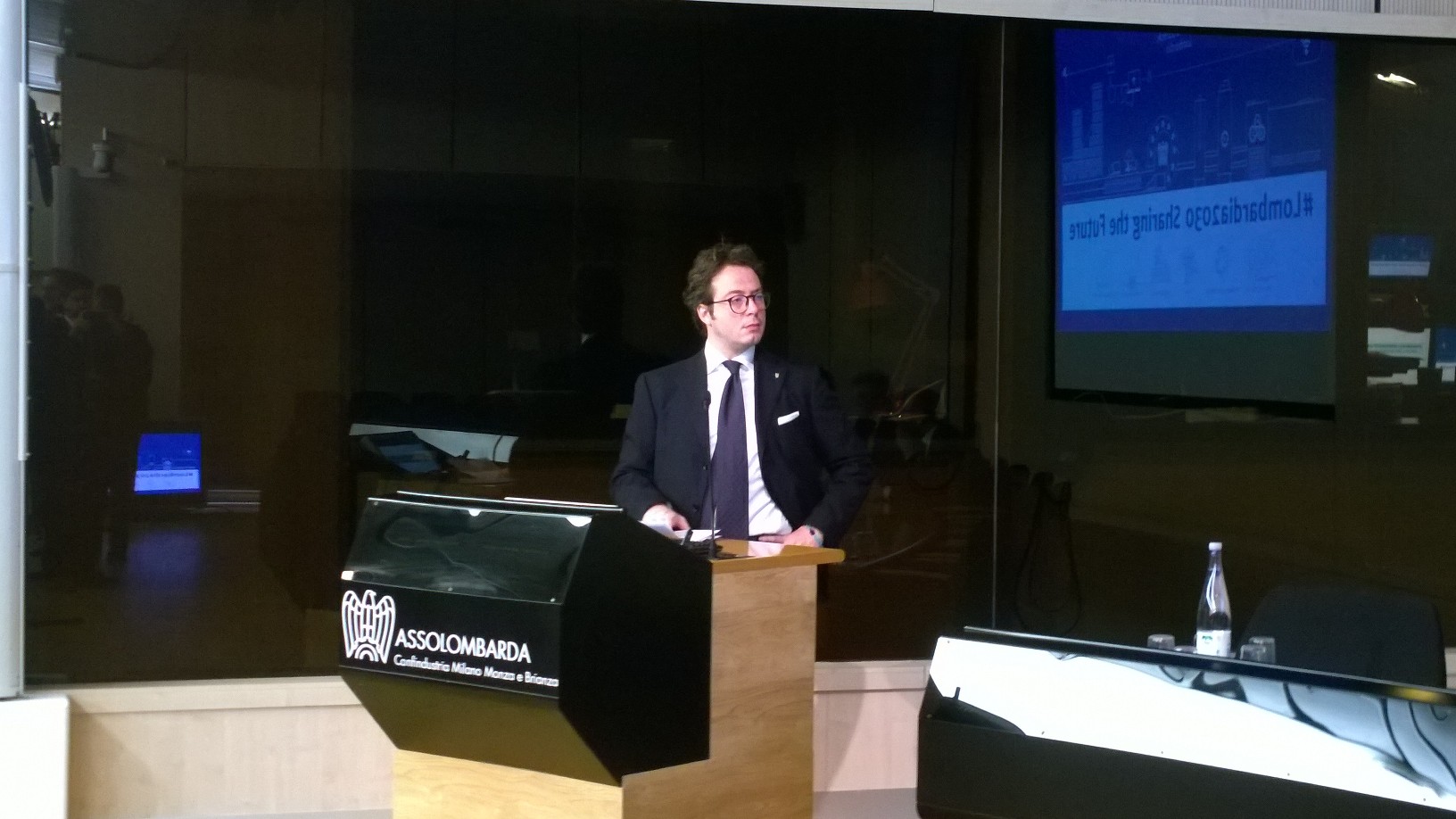
Ribolla: joining forces to look to the future; Lombardy lives and will continue to live by manufacturing
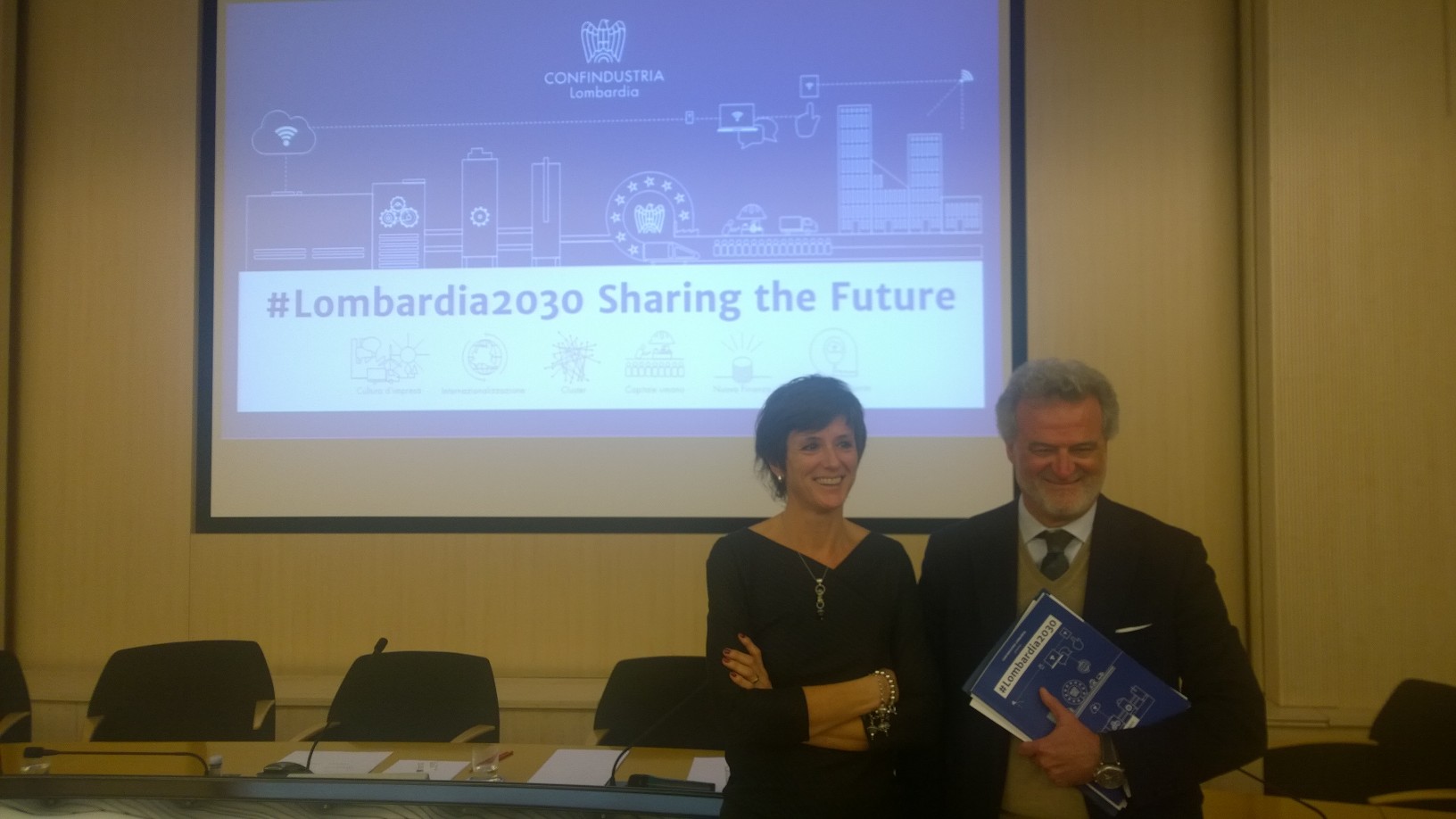
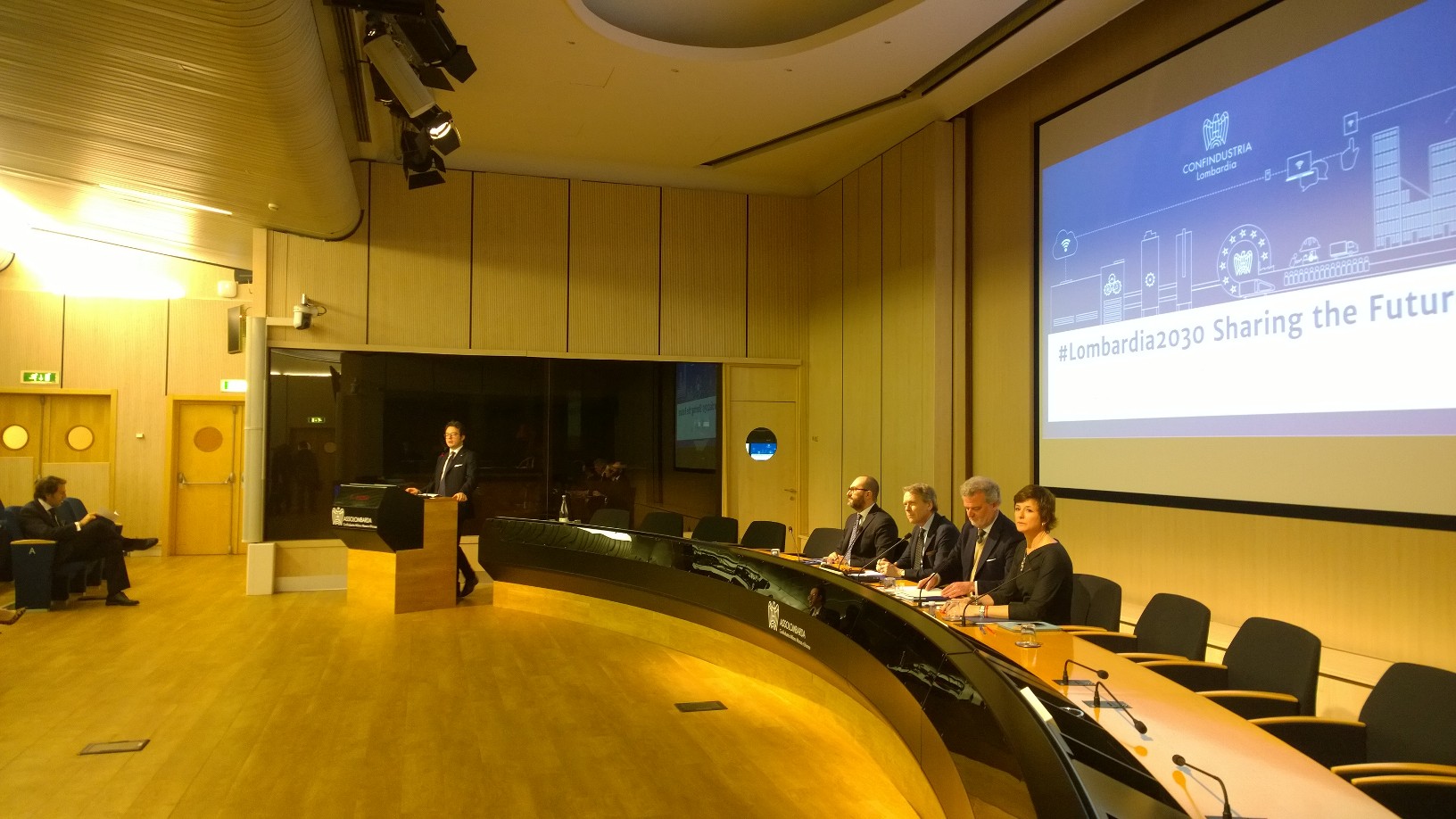
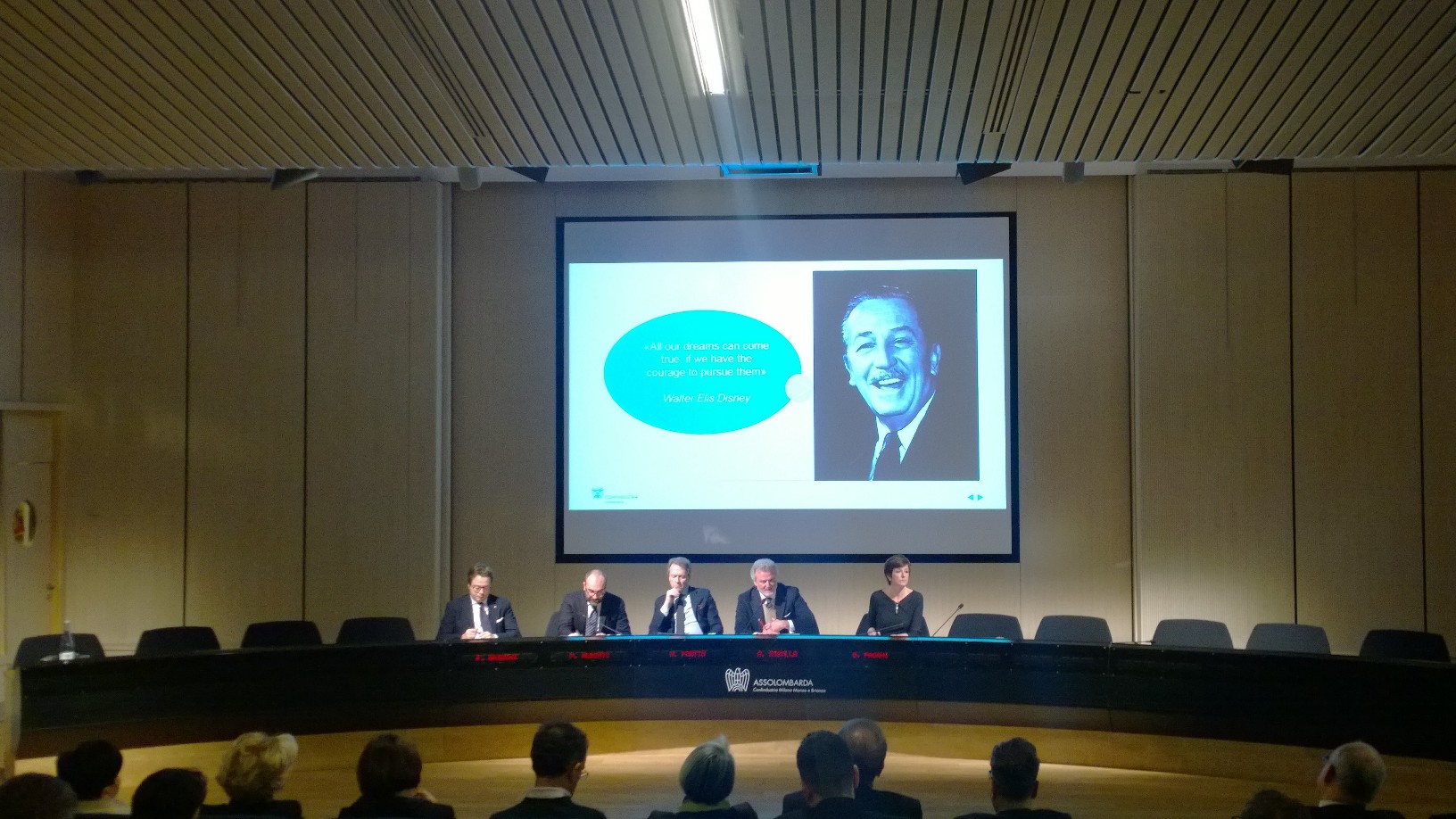
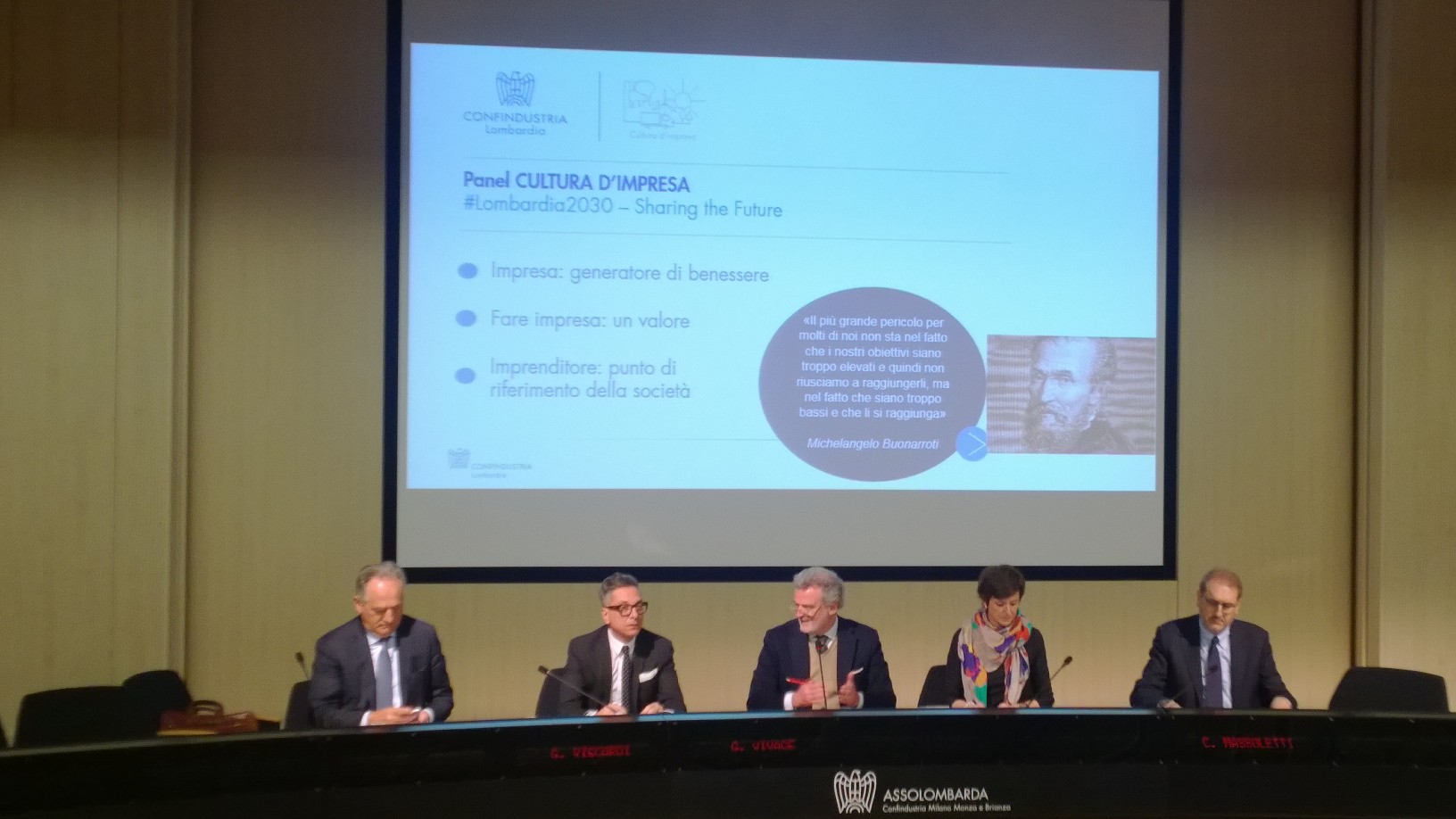
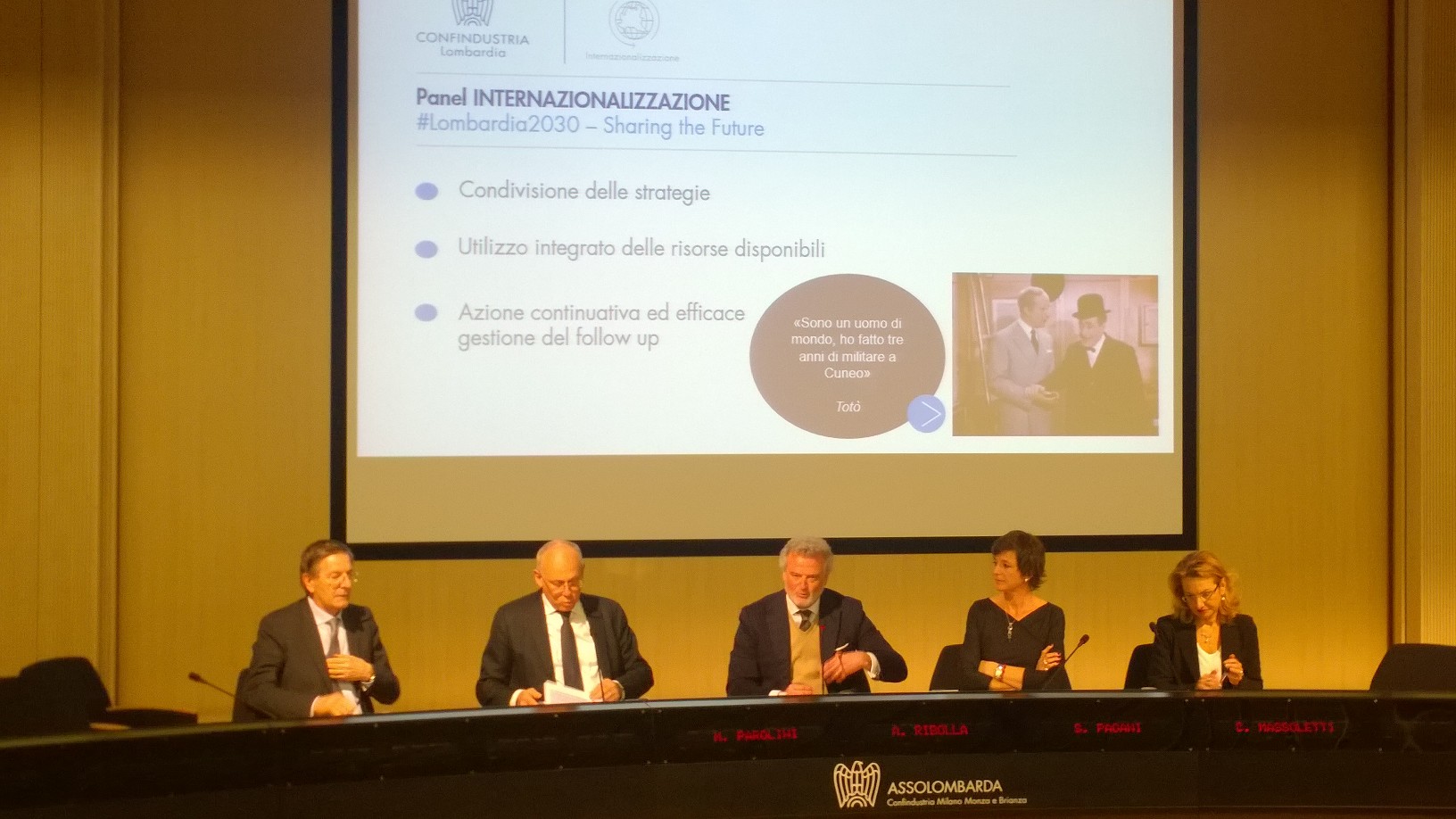
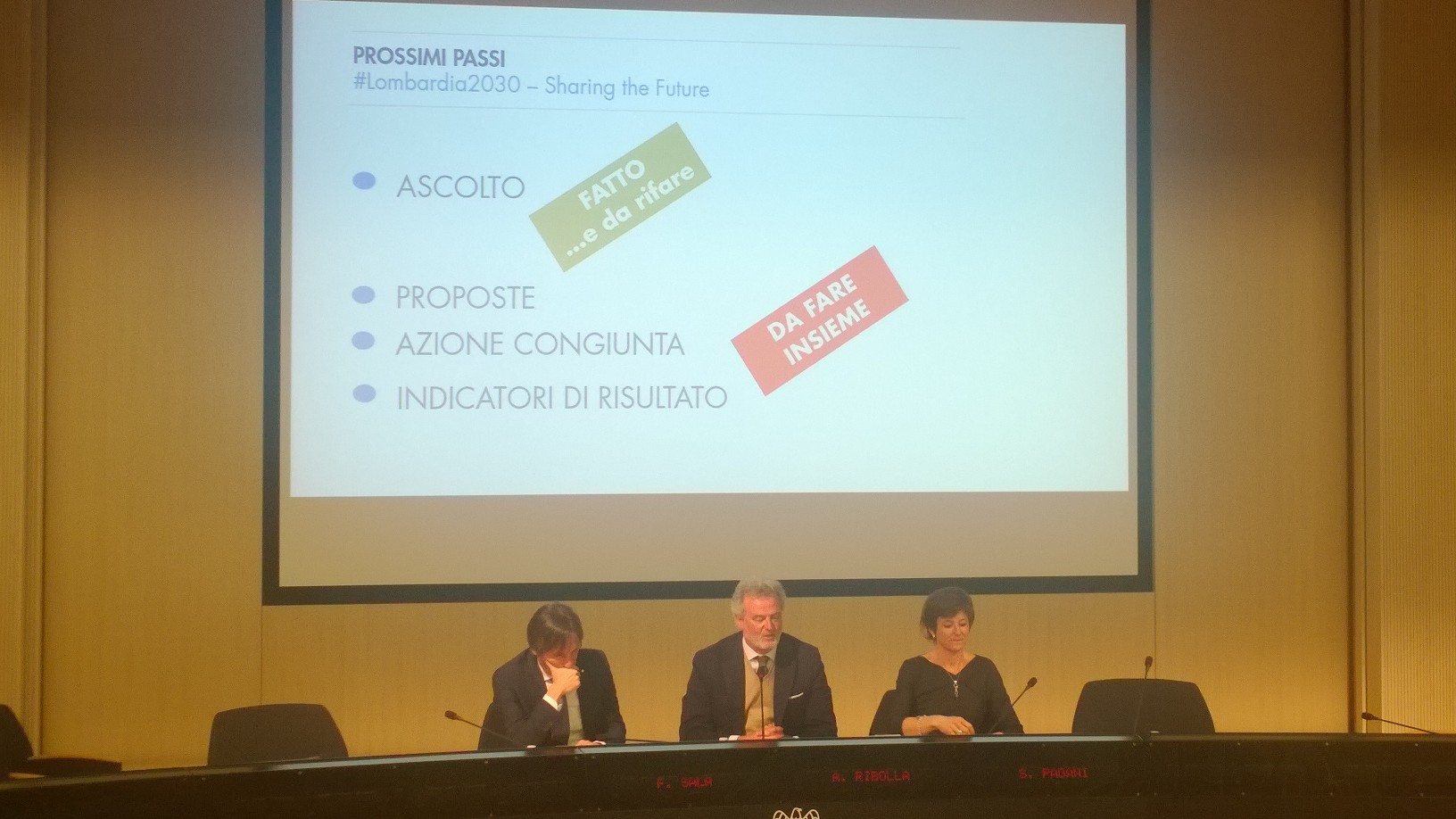
Milan, 23 February 2016 – Today, #Lombardia2030 – Sharing the Future was held at the Palazzo Gio Ponti Auditorium in Milan, an event organised by Confindustria Lombardia with the main regional economic and institutional stakeholders. The meeting launches a process of sharing the #Lombardia2030 strategic plan, seeking synergies with key public and private partners to develop the competitiveness of businesses and territories.
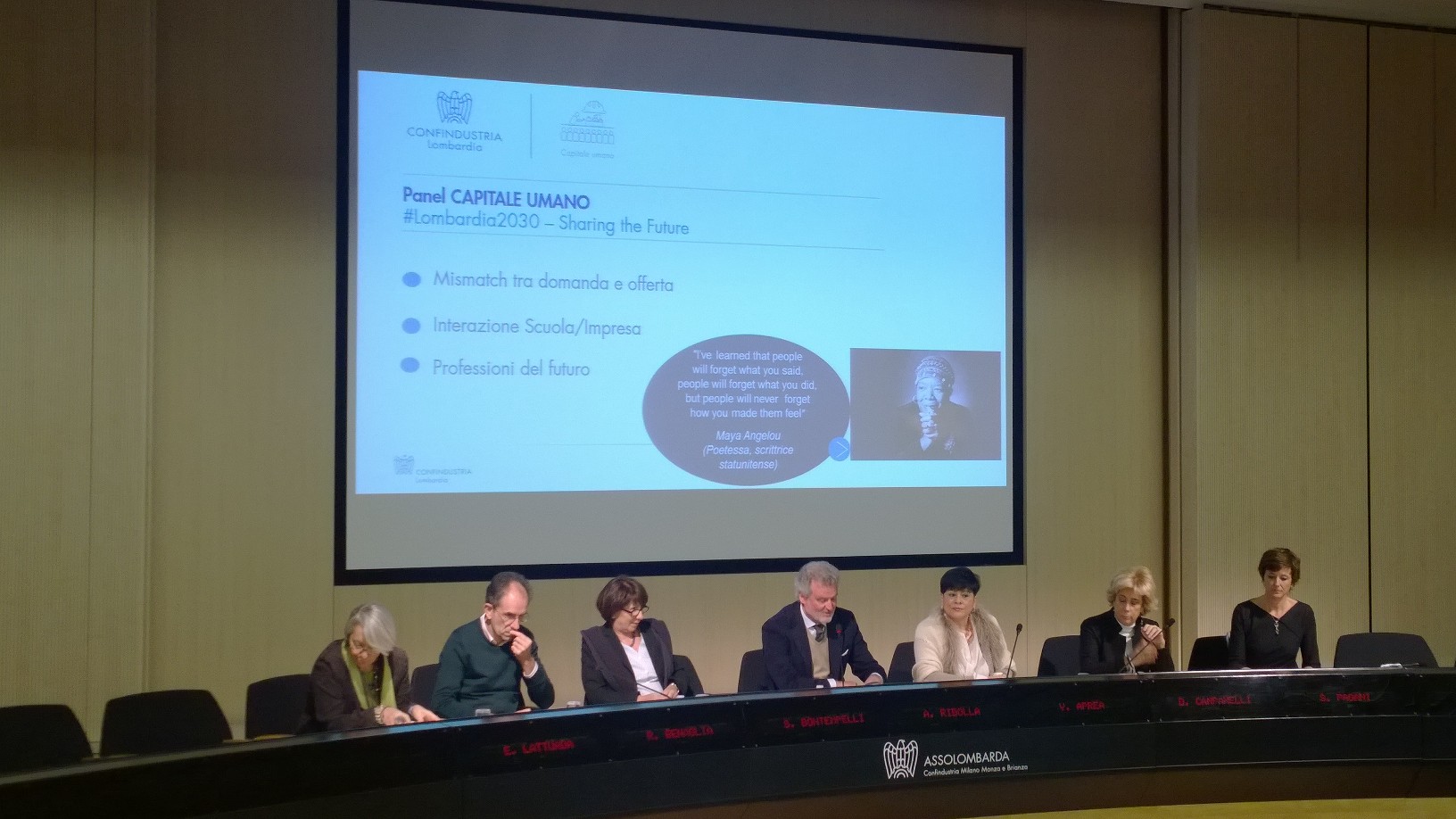
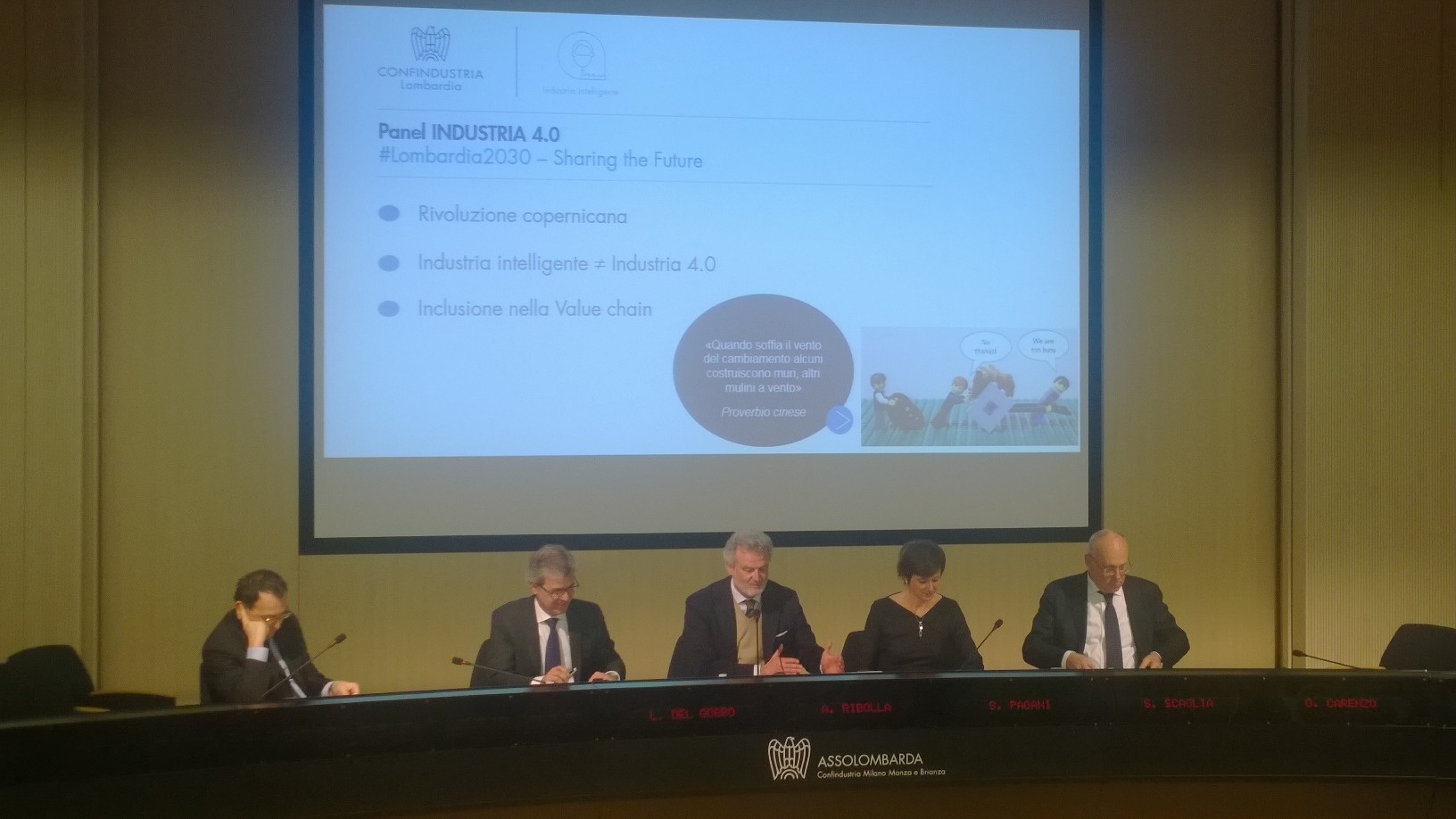
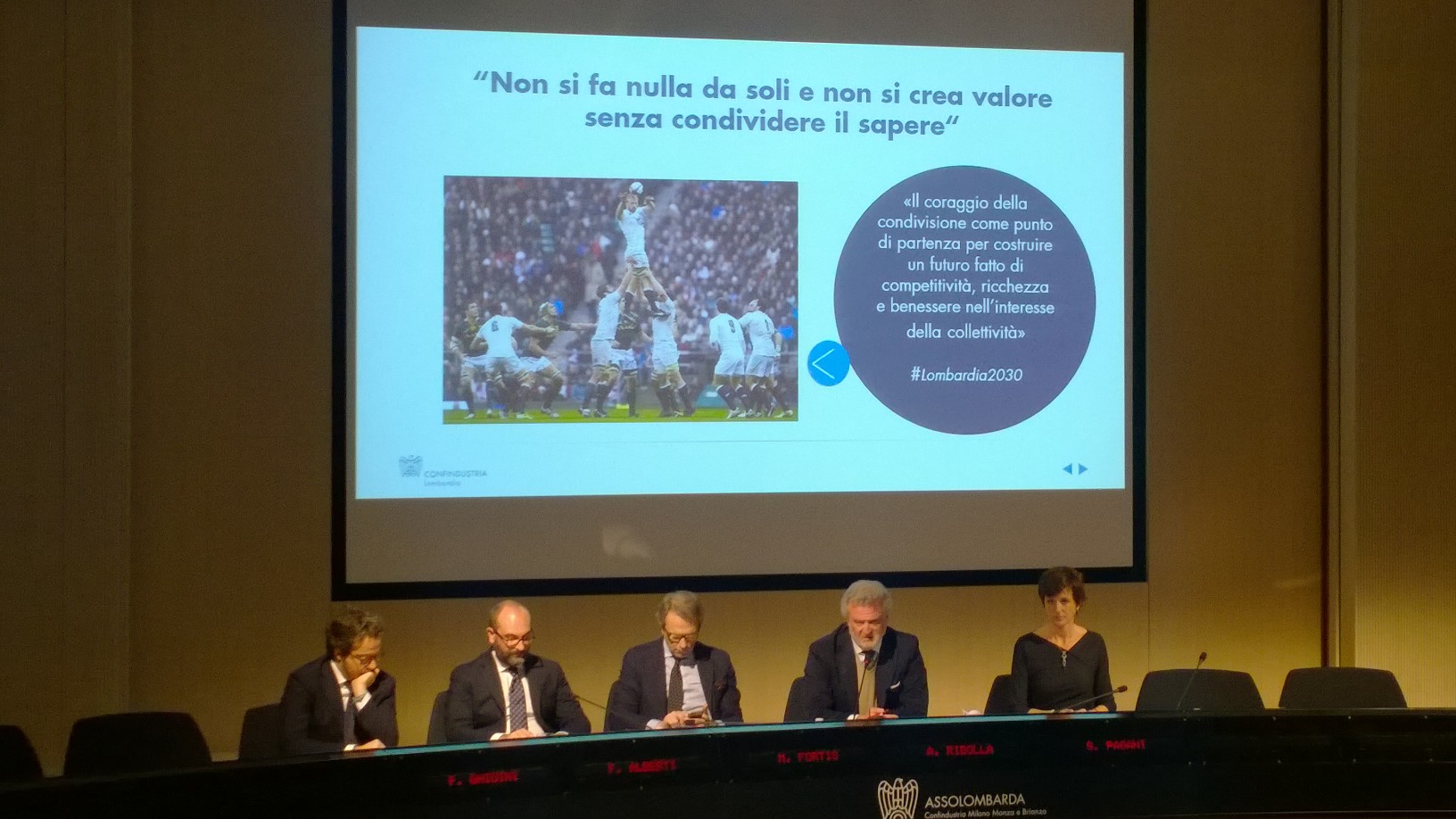
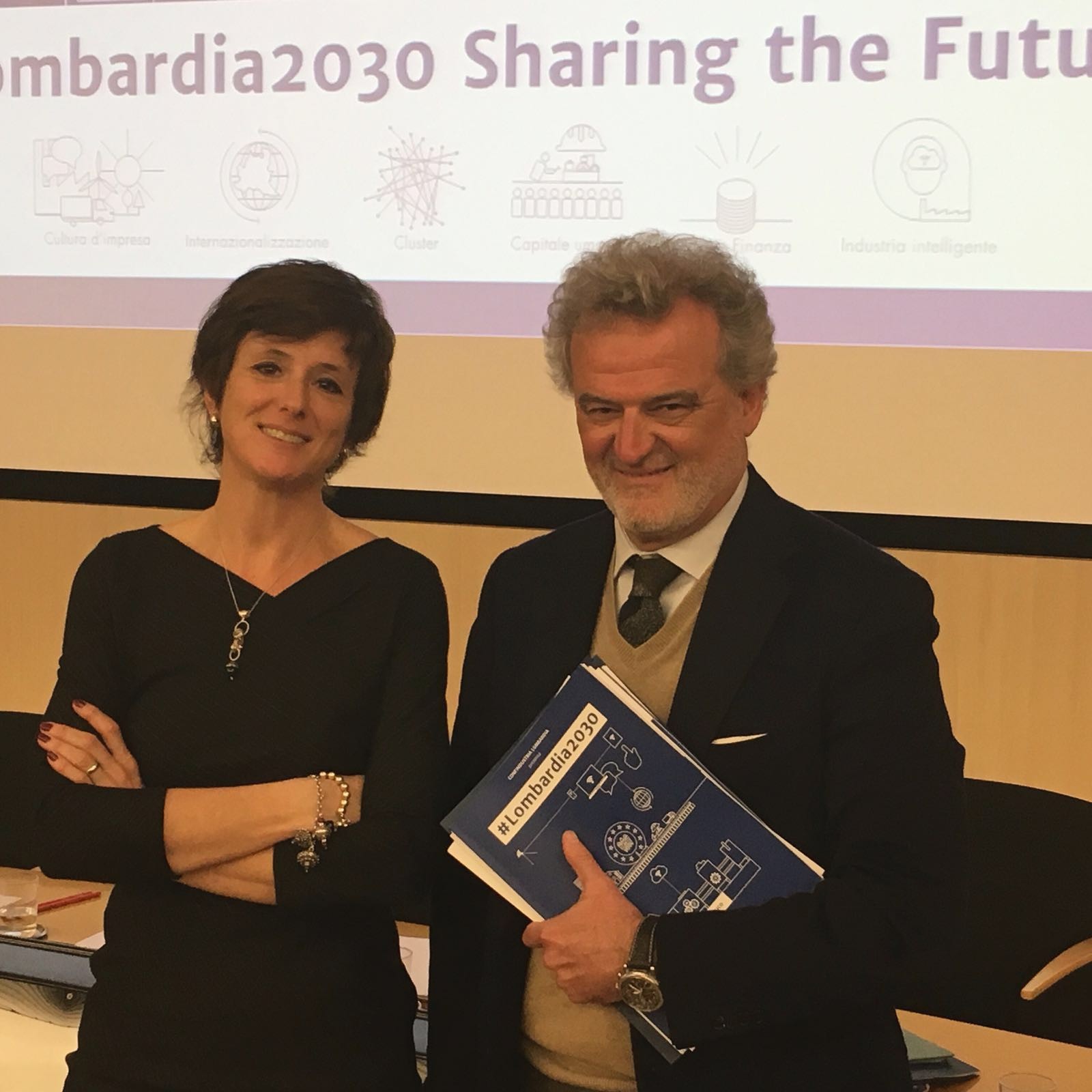
“The courage to share as a starting point for building a future of competitiveness, wealth and well-being, in the interest of the community” was the refrain of Confindustria Lombardia President Alberto Ribolla who, starting from the actions implemented by Confindustria Lombardia, encouraged the speakers to discuss each of the development areas identified in #Lombardia2030: Human Capital, Business Culture, Internationalisation, Clusters, and Industry 4.0.
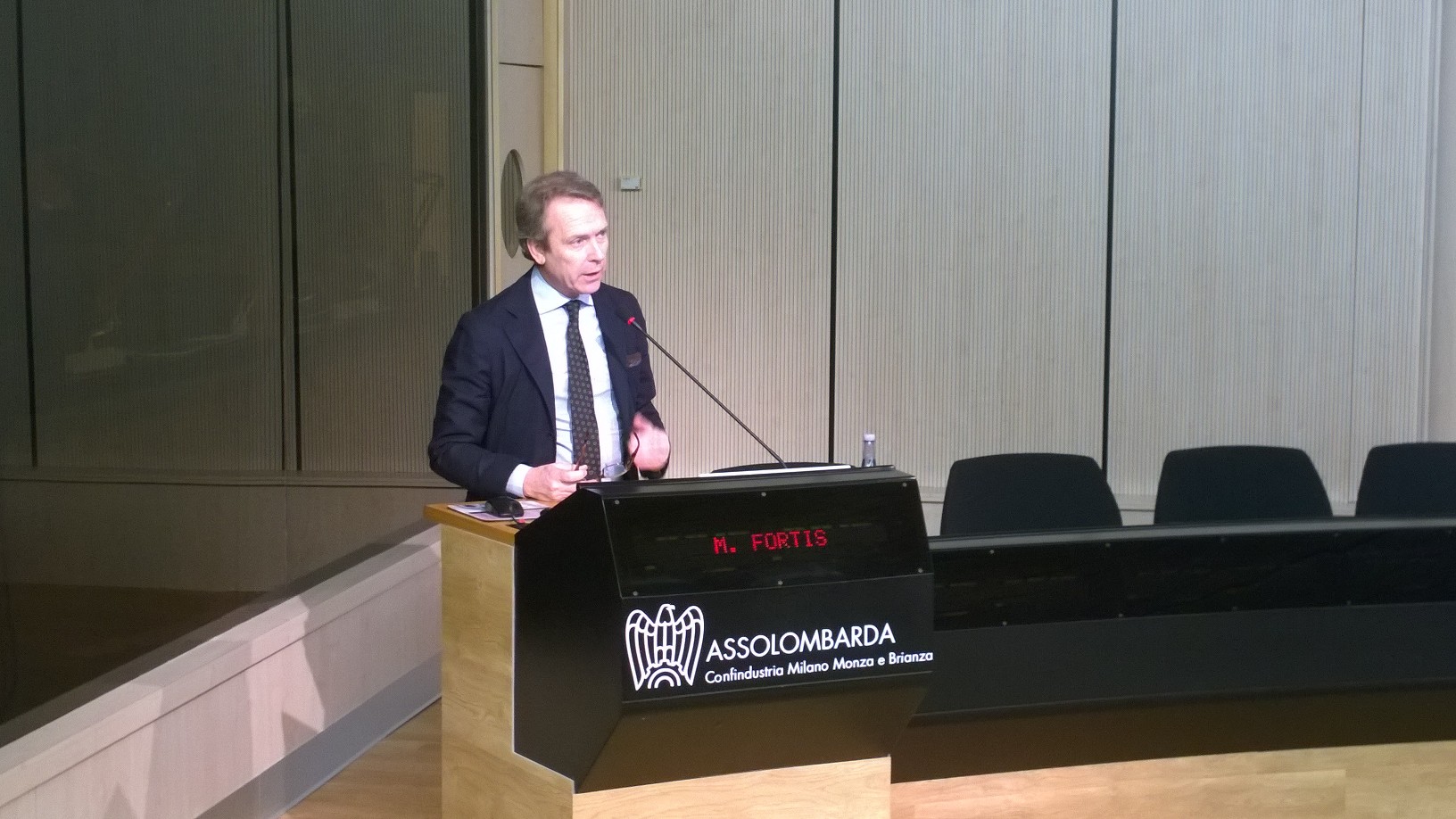
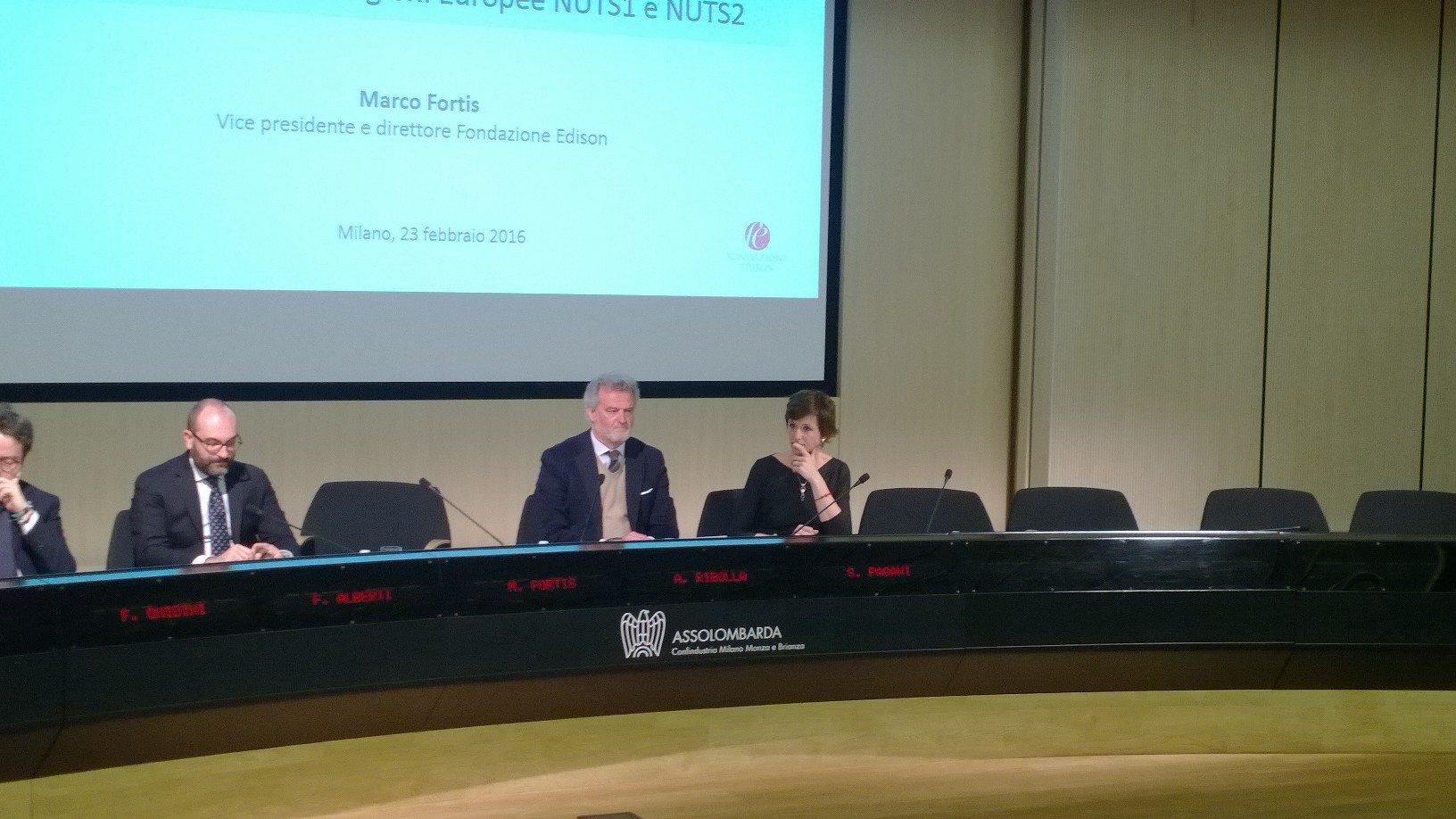
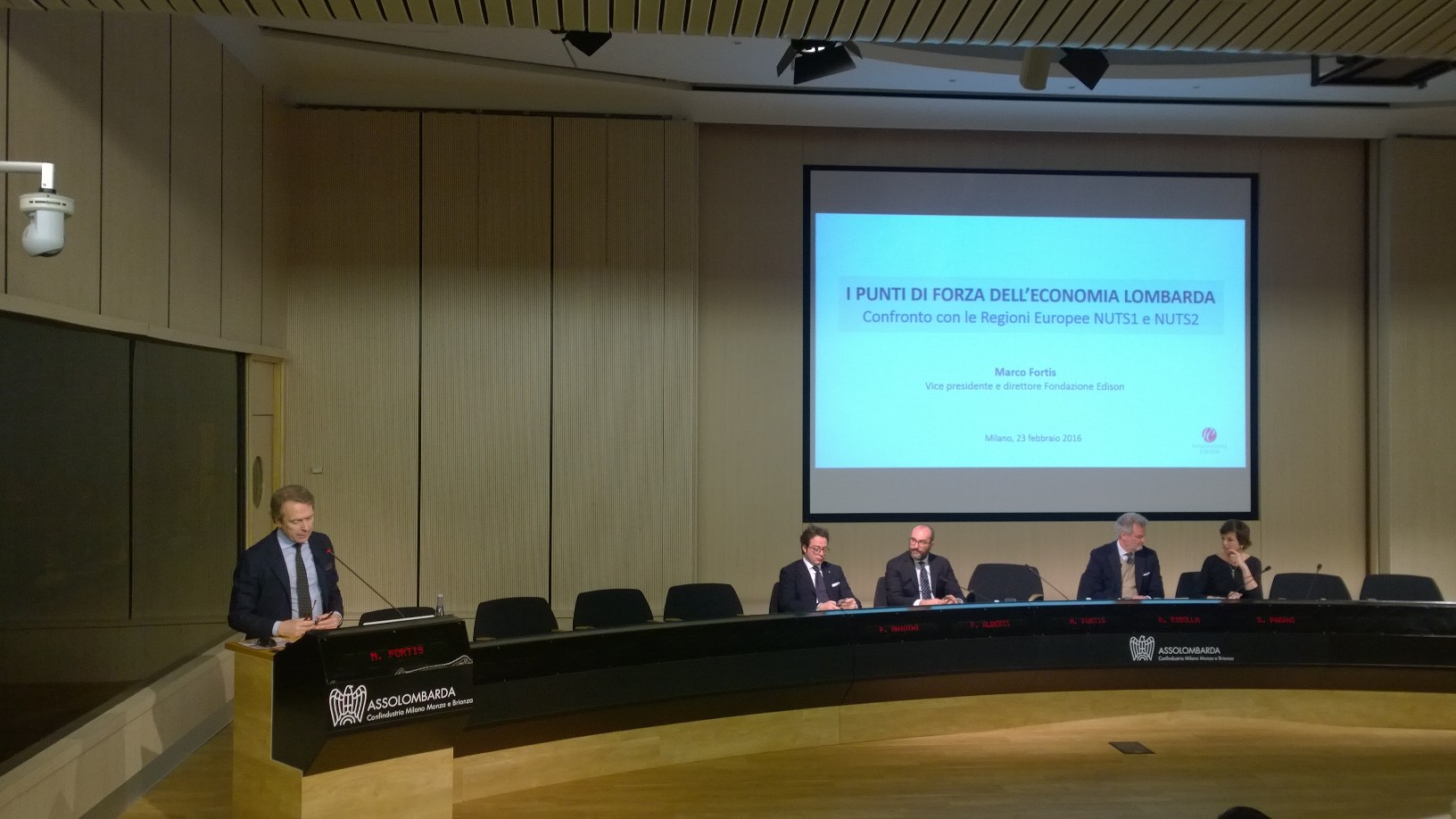
The meeting was introduced by speeches from the Director of the Confindustria Study Centre, Luca Paolazzi, Professor Fernando Alberti of LIUC – Cattaneo University, and a contribution from the Vice President of the Edison Foundation, Marco Fortis, author of the focus ‘The economic-productive fabric of Lombardy’ for #Lombardia2030: “The Lombard economy has numerous strengths, but they are little known to the general public. Lombardy is the second-largest region in Europe for GDP generation and the first for industrial value added. If considered as a state in its own right, it would rank tenth among European countries in terms of GDP and eighth for industrial value added,” stated Prof. Marco Fortis.
“Extraordinary results made possible by the vitality of its manufacturing system, which also leads in Europe in terms of employment and exports. Considering the 23 sectors into which manufacturing activities are divided, Lombardy ranks in the top three no fewer than 16 times for the number of employees, while the value of Lombard manufacturing exports is equal to about a third of that of the main European countries (excluding Germany). Mechanical engineering – added the Vice President of the Edison Foundation - is one of the jewels in the crown of Lombard industry. Just one example: the largest vertical lathe in the world is Lombard, commissioned by a German multinational to refurbish the Kaplan turbines of the most important hydroelectric power plant on the Volga”.
In the new global competitive scenario, to maintain or increase these results, long-term system planning is required to ensure a high level of competitiveness for businesses and territories.
“The strong and passionate request from the Lombard industrial world – declares Confindustria Lombardia President Alberto Ribolla – is to build, together with institutions and other economic actors, the conditions to develop widespread well-being in the territories, by pooling design, entrepreneurial and innovation capabilities. To compete in global markets, we need long-term planning, as well as strong partnerships with all stakeholders. This is why we have #Lombardia2030, because tomorrow’s competitiveness depends on the choices we make today, always keeping in mind where we come from: Lombardy lives and will continue to live by manufacturing,” concluded Alberto Ribolla.
And the present translates into a series of actions and objectives put on the table by Confindustria Lombardia, above all: a project for the development of technical education; the growth of Lombard technological clusters; creating a regional system by pooling dedicated funds and skills for internationalisation; the creation of an Industry 4.0 development and experimentation centre in the EXPO areas; establishing the World Manufacturing Forum in Lombardy on a permanent basis; and the promotion of the EUSALP macro-region and European networks, and within them, the enhancement of Lombard industry.
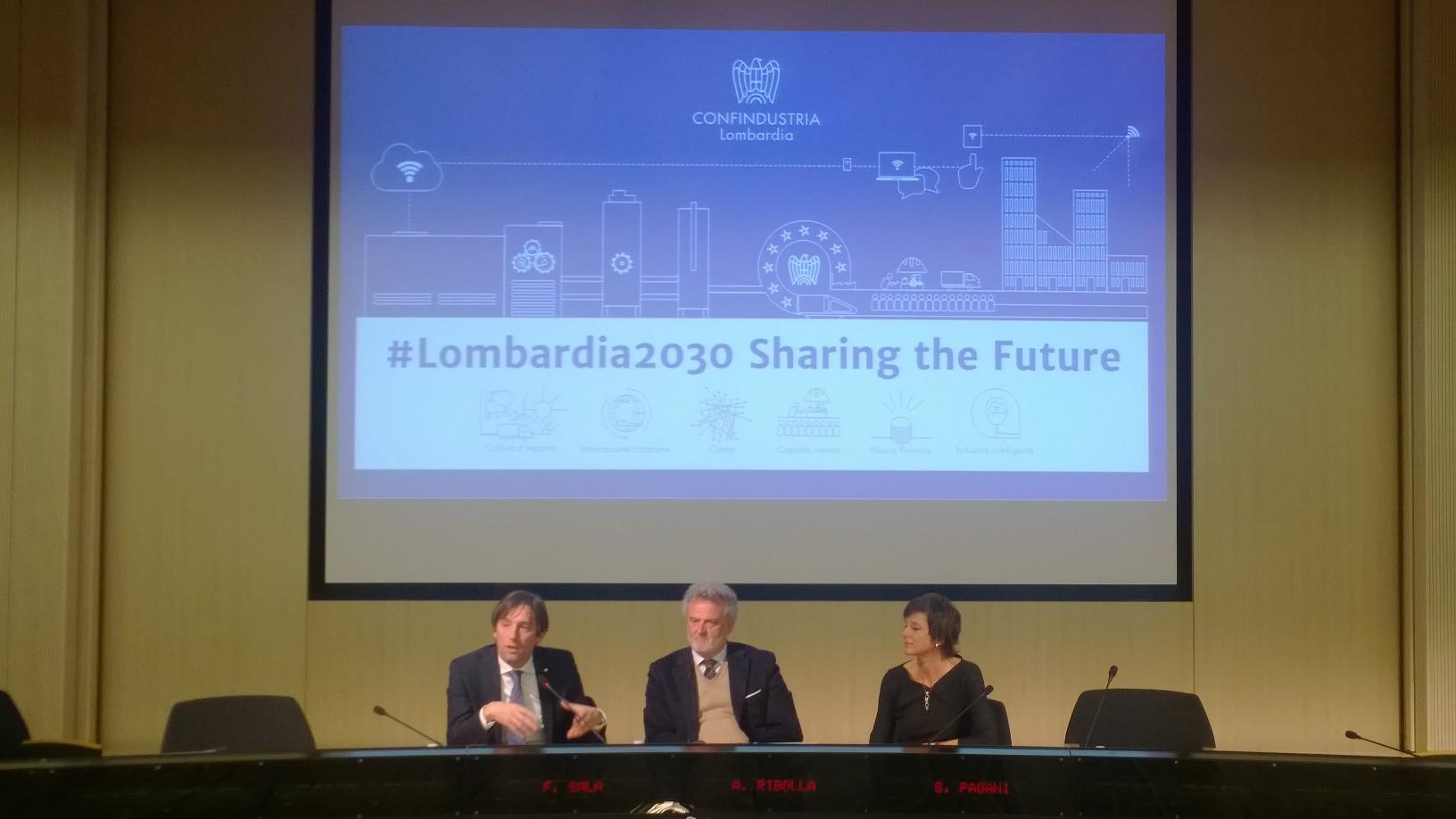
The conclusion of #Lombardia2030 – Sharing the Future was entrusted to the words of the Vice President of the Lombardy Region Fabrizio Sala: “The Lombardy Region has initiated a discussion starting from the territories to define specific guidelines for the future of our land. Guidelines that must necessarily start from the specificities of these territories and which will have to be central, for example, in the definition of the new Lombard cantons, taking into account, for instance, territorial production specificities. The experimental Strategic Plan project for the Brianza area, which could then be extended to other territories, is moving in this direction. Then there is the international strategy of the Lombardy Region, which involves making positive use of the follow-up to Expo 2015 in terms of economic relations and the networks of cutting-edge European regions that implement common strategies. We are thinking, for example, of the ECRN network for the chemical sector or NEREUS for the space sector, or even the Vanguard Regions project, which involves our very own innovative clusters”.
“The Alpine Macro-region, EUSALP, was also rightly mentioned, which allows us to form an agglomeration that can dialogue directly with the European Union regarding the most important issues for our economy. But relations today must not stop at Europe. As a Region, we are in fact launching a series of agreements with counterparts in Eurasian countries and the Middle East, which represent the vital space for the diversification of our production and for our exports. In short, we must all design the Lombardy of the future together, not five years from now, but over the next twenty years. We must do this as a Region, but also and above all together with our stakeholders: trade associations but also trade unions, because we must not forget that development is only truly such if it also contemplates an improvement in the daily lives of citizens. And that is why we are here today and why we appreciate the courage of those who have expressed the desire to define a territorial plan that is not limited to ‘sight-navigating’, but that looks many years ahead and is shared with all Lombard institutional actors. The Lombardy Region is ready to design its future alongside those who want to believe in this future,” concluded Fabrizio Sala.
Participants in the meeting included: Federico Ghidini, President of the Young Entrepreneurs of Confindustria Lombardia; Valentina Aprea, Regional Minister for Education, Training and Labour; Delia Campanelli, Director of the Regional School Office; Serena Bontempelli, UIL Milan and Lombardy Secretariat; Roberto Benaglia, CISL Lombardy Regional Secretary; Elena Lattuada, CGIL Lombardy General Secretary; Carlo Massoletti, President of Confcommercio Brescia; Giuseppe Vivace, General Secretary of CNA Lombardy; Gianluigi Viscardi, President of Small Industry Confindustria Lombardia; Mauro Parolini, Regional Minister for Economic Development; Enzo Rodeschini, Director of Unioncamere Lombardia; Simonetta Acri, Director of SACE; Luca Del Gobbo, Regional Minister for Universities, Research and Open Innovation; Stefano Scaglia, President of AFIL; Gianluca Carenzo, Director of the Parco Tecnologico Padano; Eugenio Massetti, President of Confartigianato Lombardia; and Marco Taisch, Politecnico di Milano.
subscribe to the EEN newsletter